
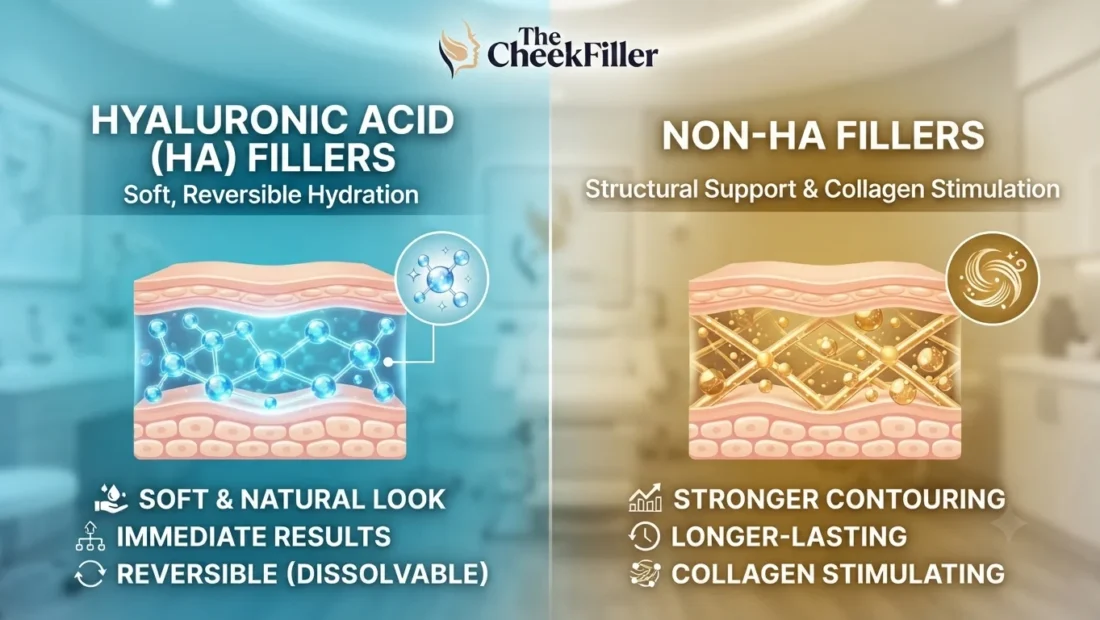
When it comes to dermal fillers, the choice between HA fillers and non-HA fillers depends on your goals, how long you want results to last, and how natural you want the treatment to feel. In the U.S., HA fillers remain the most commonly used option, while non-HA fillers are gaining attention for longer-lasting volume and collagen-stimulating benefits.
HA fillers are often preferred for their smooth results and reversibility, but non-HA fillers may be a better fit for people looking for more structure or extended longevity. Understanding how each one works can help you make a smarter, more confident choice before treatment.
What Are HA (Hyaluronic Acid) Fillers?
HA fillers are injectable gels made with hyaluronic acid, a substance your body naturally produces to help keep skin hydrated, plump, and smooth. In aesthetic treatments, they’re commonly used to soften lines, restore lost volume, and enhance facial features like the lips, cheeks, and under-eye area.
One of the biggest reasons HA fillers are so popular is their versatility. They can deliver subtle, natural-looking results when used by an experienced injector, and they’re also reversible in many cases, which gives many people extra peace of mind. For patients who want a treatment that can be fine-tuned, HA fillers are often the first option to consider.
What Are Non-HA Fillers?
Non-HA fillers are dermal fillers made from ingredients other than hyaluronic acid, such as calcium hydroxylapatite, poly-L-lactic acid, or polymethylmethacrylate. Instead of mainly adding immediate volume, many of these fillers work by stimulating collagen or providing longer-lasting structural support beneath the skin.
These fillers are often chosen when someone wants more durability, stronger contouring, or a result that improves gradually over time. They can be a smart option for deeper folds, facial definition, or volume loss that needs more than just temporary hydration. Because each type works differently, the right choice depends on the area being treated, the result you want, and the injector’s recommendation.
How HA and Non-HA Fillers Work in the Skin
How HA fillers work
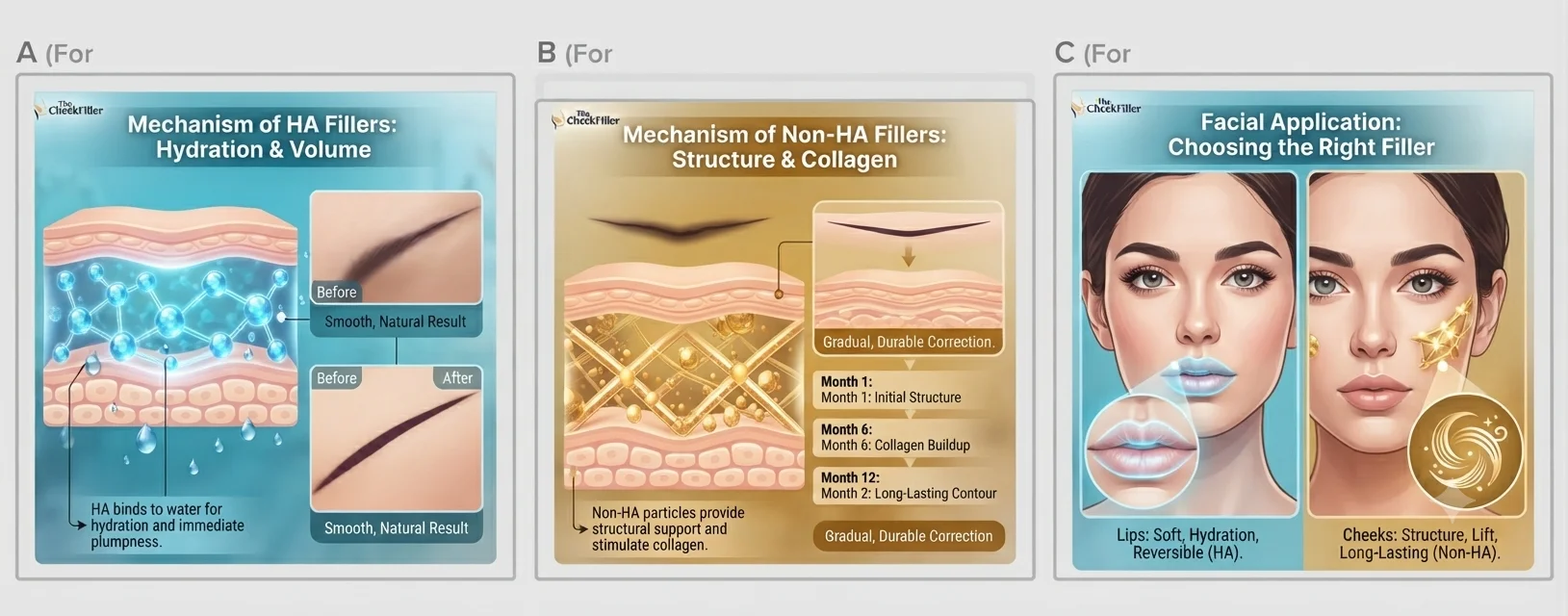
HA fillers work by binding with water in the skin, which helps create a smoother, fuller, and more hydrated appearance. Because hyaluronic acid is naturally found in the body, these fillers tend to blend well with facial tissue and are often used when the goal is soft, natural-looking enhancement. They are especially useful for fine lines, lip volume, and areas that need a quick boost in freshness and hydration.
How non-HA fillers work
Non-HA fillers work differently depending on their ingredients, but many are designed to add structure or stimulate collagen production over time. Instead of simply replacing lost volume right away, they can encourage the skin to support itself more effectively, which is why some results appear more gradual. This makes them a strong option for people looking for longer-lasting improvement in areas like the cheeks, jawline, or deeper facial folds.
What this means for results
The biggest difference is how each filler behaves after injection. HA fillers usually give faster, softer results, while non-HA fillers often focus on durability and deeper support. In practical terms, that means the best choice depends on whether someone wants immediate refinement, longer-lasting volume, or collagen stimulation as part of their treatment plan.
HA vs. Non-HA Fillers: Key Differences at a Glance
HA fillers and non-HA fillers both improve facial volume, but they do it in different ways and with different strengths. The best choice depends on whether someone wants softer, more flexible results or longer-lasting structural support.
| Feature | HA Fillers | Non-HA Fillers |
| Main ingredient | Hyaluronic acid, a substance naturally found in the body | Other ingredients such as calcium hydroxylapatite, poly-L-lactic acid, or PMMA |
| How they work | Add hydration and volume by attracting water | Add structure and may stimulate collagen production |
| Result style | Soft, smooth, and natural-looking | Firmer, more structural, or gradually improving |
| Onset of results | Usually immediate | Can be immediate or gradual, depending on the type |
| Longevity | Often shorter to moderate | Often longer-lasting |
| Reversibility | Many HA fillers can be dissolved | Most non-HA fillers cannot be easily reversed |
| Best for | Lips, fine lines, under-eyes, and subtle volume | Deeper folds, facial contouring, and longer-term correction |
| Common patient preference | People wanting flexibility and adjustability | People wanting durability and more structural support |
Longevity: How Long Do HA and Non-HA Fillers Last?
The longevity of dermal fillers depends on the product type, treatment area, and how quickly your body metabolizes the material. In general, HA fillers tend to last around 6 to 18 months, though some formulations may last longer in areas with less movement. Non-HA fillers often provide longer-lasting results, with some lasting 12 months to several years depending on the ingredient and how the skin responds.
For many patients, this difference matters because it affects both maintenance and cost over time. HA fillers are a better fit if you want flexibility and the option to adjust results more often, while non-HA fillers may appeal to people looking for a longer-term solution with fewer touch-ups.
Reversibility: Can Non-HA Fillers Be Dissolved Like HA Fillers?
HA fillers have a major advantage here: many of them can be dissolved with an enzyme if the result needs to be corrected. That makes them a popular choice for first-time patients or anyone who wants a treatment that offers more control and peace of mind. Non-HA fillers, on the other hand, usually cannot be dissolved in the same way.
This is why choosing a highly experienced injector matters so much with non-HA fillers. Since removal is not as simple, the treatment plan should be discussed carefully before injection, especially if the goal is subtle enhancement or if you are treating a sensitive area.
Safety Profile and Side Effects: HA vs. Non-HA
Both HA and non-HA fillers are widely used and can be safe when performed by a qualified professional, but their side effect profiles can differ. Common temporary effects for both include swelling, redness, tenderness, bruising, and mild asymmetry right after treatment. These usually improve within a few days to a couple of weeks.
HA fillers are often considered more forgiving because they are reversible and have a long track record in aesthetic medicine. Non-HA fillers can also be safe, but they may carry a higher need for careful placement and follow-up since correction is not as straightforward. The safest approach is always a personalized consultation, because the right filler should match your anatomy, goals, and tolerance for risk.
Best Uses: Which Facial Areas Suit Each Filler Type
Here are facial areas that suit each filler type:
- Lips:
HA fillers are usually the go-to choice for lip enhancement because they create a soft, natural look and can be adjusted more easily if needed. They’re also helpful when the goal is to add hydration, shape, or subtle volume without making the lips feel heavy.
- Under-eyes:
HA fillers may be suitable for carefully selected under-eye cases where the concern is hollowness or tired-looking shadowing. This area needs a gentle approach, so precision and product choice matter a lot.
- Cheeks:
Both filler types can work in the cheeks, but HA fillers are often used for soft volume restoration, while non-HA fillers may be chosen for more structural support and longer-lasting contour.
- Nasolabial folds:
HA fillers are commonly used for smile lines because they blend smoothly and offer a flexible, natural result. In deeper folds, some non-HA fillers may be considered when more durable support is needed.
- Jawline and chin:
Non-HA fillers are often preferred here when stronger definition or longer-lasting structure is the goal. HA fillers can also be used, especially when a softer enhancement is enough.
- Temples and deeper volume loss:
Non-HA fillers may be a better fit in areas that need more lift or collagen stimulation over time. The wrinkles often benefit from a treatment that supports facial structure rather than just surface volume.
- Fine lines and subtle correction:
HA fillers usually work well for delicate areas because they integrate smoothly and allow for a more controlled, refined result. This makes them a strong choice when natural-looking improvement is the priority.
- Best overall rule: Choose HA fillers when you want softness, flexibility, and reversibility. Choose non-HA fillers when you want stronger structure, longer-lasting results, or collagen-building benefits.

Popular HA Filler Brands & Non-HA Filler Brands
The following are popular HA Filler Brands & Non-HA Filler Brands:
- Popular HA filler brands:
Some of the most recognized hyaluronic acid filler brands include Juvéderm, Restylane, Belotero, and Teosyal. These brands are widely used because they offer a range of formulas for lips, cheeks, fine lines, and facial contouring.
- Why HA brands are widely chosen:
HA fillers are popular because they tend to feel natural, are versatile across different facial areas, and can often be adjusted or dissolved if needed. That flexibility makes them a common starting point for both patients and injectors.
- Popular non-HA filler brands:
Well-known non-HA filler options include Radiesse, Sculptra, and Bellafill. These are often selected for people who want longer-lasting volume, collagen stimulation, or stronger structural support.
- Why non-HA brands stand out:
Non-HA fillers are often valued for durability and deeper tissue support. In many cases, they are used when the treatment goal is not just to fill lines, but to improve facial structure over time.
Cost Comparison: HA vs. Non-HA Fillers
Pricing can vary a lot based on the brand, injector experience, treatment area, and the clinic’s location, but HA fillers are usually the more affordable option upfront. Non-HA fillers often cost more per session because they may last longer or offer more structural benefits, which can make them a stronger long-term value for some patients.
Here’s a simple state-based comparison using typical U.S. market ranges seen in major aesthetic markets:
| U.S. State | HA Fillers (per syringe/session) | Non-HA Fillers (per syringe/session) |
| California | $700–$1,200 | $900–$1,500 |
| New York | $750–$1,300 | $950–$1,600 |
| Florida | $650–$1,100 | $850–$1,400 |
| Texas | $600–$1,050 | $800–$1,350 |
| Illinois | $650–$1,100 | $850–$1,400 |
| New Jersey | $700–$1,250 | $900–$1,550 |
| Arizona | $600–$1,000 | $800–$1,300 |
| Massachusetts | $750–$1,250 | $950–$1,550 |
Final Words!
Choosing between HA and non-HA fillers really comes down to your goals, your comfort level, and how long you want the results to last. HA fillers are a great choice if you want soft, natural-looking volume with the added reassurance of reversibility, while non-HA fillers may be better if you’re looking for longer-lasting support, collagen stimulation, or more defined structure.
There isn’t one “best” filler for everyone, which is why a personalized treatment plan matters so much. The right option should match your facial anatomy, aesthetic goals, and the experience of the injector performing the treatment. For readers exploring expert guidance and facial filler insights, The Cheek Filler is a helpful resource for learning more about treatment options and making a more informed decision.
Considering treatment?
Browse injectors in our directory and compare their training, treatments and location before you book a consultation.