
If you have ever looked in the mirror and noticed your cheeks looking slightly flatter, your under-eye hollows casting deeper shadows, or subtle lines settling around your mouth, you are observing the natural architecture of facial aging. Over time, our faces lose the dense structural scaffolding that kept our features plump, defined, and lifted in our younger years.
Dermal fillers have emerged as one of the most effective, versatile, and minimally invasive options in modern aesthetic medicine to address these changes. However, despite their popularity, considerable misunderstanding remains regarding what fillers actually are, how they interact with living tissue, and how to achieve results that look beautifully natural rather than overdone.
At The Cheek Filler, we believe that exceptional aesthetic outcomes start with education. Understanding the biological mechanisms behind cosmetic injectables empowers you to make confident, informed decisions about your facial care.
What Are Dermal Fillers? (The Biological & Material Science)
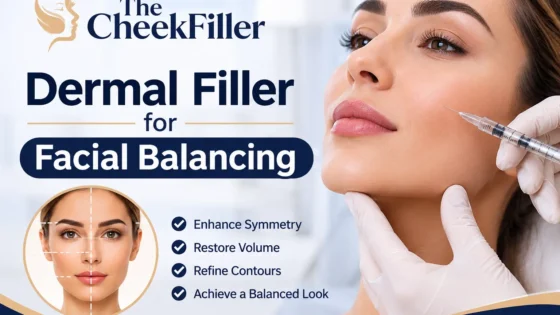
Dermal fillers are medical-grade, injectable gels formulated to restore lost volume, enhance facial contours, smooth structural folds, and stimulate the skin’s internal repair mechanisms. Unlike topical creams that work only on the surface stratum corneum, dermal fillers are placed deep within dermal and sub-dermal tissue planes to rebuild structural support from the inside out.
Not all fillers are created equal. Different materials serve distinct clinical purposes based on their molecular composition, thickness, and longevity.
Hyaluronic Acid (HA) Fillers: The Hydration & Support Standard
Hyaluronic acid is a naturally occurring complex sugar (glycosaminoglycan) found in human skin, connective tissue, and joint fluid. Its defining physiological characteristic is its ability to attract and bind up to 1,000 times its weight in water. Synthetic HA gels (such as Juvederm and Restylane) are bio-compatible, smooth, and predictable. A key safety advantage of HA fillers is complete reversibility, they can be dissolved promptly using the enzyme hyaluronidase if adjustment or removal is ever required.
Calcium Hydroxylapatite (CaHA): Structural Integrity & Collagen Stimulation
Formulated with microscopic calcium-based particles suspended in a smooth aqueous gel, CaHA (commonly known as Radiesse) is heavier and denser than standard HA gels. When injected, CaHA provides immediate physical volume while simultaneously functioning as a scaffold. Over time, the body metabolizes the gel carrier and leaves behind micro-spheres that stimulate fibroblast cells to produce new endogenous collagen, offering longer-lasting structural reinforcement.
Poly-L-Lactic Acid (PLLA): The Long-Term Biostimulator
Unlike traditional space-occupying gel fillers, PLLA (such as Sculptra) is classified as a bio-stimulatory injectable. Made from a biodegradable synthetic polymer, PLLA works gradually across several months. Once injected into the deep dermis or sub-dermal tissue, it triggers a controlled, low-grade inflammatory response that signals the body to synthesize fresh, healthy collagen fibers. Results emerge subtly over time and can persist for up to two years or longer.
Polymethyl Methacrylate (PMMA) & Autologous Fat Transfer
PMMA fillers contain non-absorbable microscopic spheres suspended in collagen, used primarily for deep structural scars or permanent fold corrections. Alternatively, autologous fat grafting involves harvesting fat via micro-liposuction from another area of your body and purifying it before re-injecting it into the face. While fat transfer offers permanent potential, it requires a surgical procedure and exhibits variable survival rates compared to off-the-shelf injectables.
How Dermal Fillers Actually Work Beneath the Skin
To appreciate how fillers restore youthfulness, it helps to understand the physical and biomechanical mechanics taking place under your skin once the gel is administered.
- Mechanical Space Occupation: At its core level, filler acts as a supportive cushion. When placed in areas of tissue loss, the gel physically occupies space, elevating the overlying skin to soften deep shadows, creases, and hollows.
- Hydrodynamic Water Retention: Hyaluronic acid molecules absorb local interstitial fluid immediately following injection. This osmotic draw plumps the surrounding matrix, adding subtle hydro-density that leaves the skin looking refreshed, supple, and healthy.
- Rheology, G-Prime, and Viscoelasticity: Different facial regions demand different gel behaviors. “G-Prime” measures a filler’s structural elasticity and lifting capacity. High G-Prime gels are firm and resistant to deformation, making them ideal for mimicking bony support in the midface and jawline. Low G-Prime gels are soft, flexible, and spread smoothly, perfect for delicate mobile zones like the lips or perioral lines.
- Strategic Injection Planes (Supraperiosteal vs. Subcutaneous): Expert injectors do not simply squirt gel randomly under the skin; placement depth is critical. High-volume structural restoration requires deep placement directly above the periosteum (the membrane coating the bone) to re-establish lost skeletal projection. Superficial subcutaneous injections are reserved for fine surface smoothing and subtle border shaping.
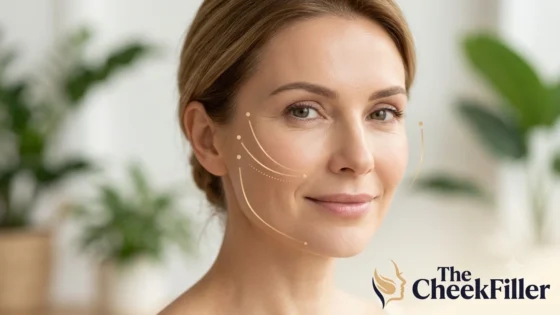
- Vectors of Support and the “Midface Anchor Effect”: Aging causes deep cheek fat pads to shrink and shift downward. By restoring structure to the upper and outer cheek framework, a skilled injector recreates the midface anchor. This indirect vector support subtly reduces the heavy appearance of lower face sagging and nasolabial folds without over-expanding the lower face.
Dermal Fillers vs. Botox: Clearing Up the Common Confusion
It is very common for patients to confuse dermal fillers with neuromodulators like Botox, Dysport, or Xeomin. While both are administered via micro-injections and complement each other beautifully, their biological mechanisms are completely different.
Mechanism: Volume Restoration vs. Muscle Relaxation
Dermal fillers are volumetric gel implants designed to fill in space, rebuild lost structure, and restore facial dimensions. They add physical substance where tissue has thinned.
Botox, on the other hand, contains purified botulinum toxin proteins that temporarily block chemical signals between nerves and target facial expression muscles. By relaxing hyperactive muscles, Botox stops the skin from creasing during dynamic facial movements.
Target Concerns: Static Wrinkles vs. Dynamic Lines
Dynamic wrinkles are lines caused by repetitive facial muscle contractions—such as crow’s feet when smiling or frown lines (the “11s”) when concentrating. Neuromodulators are the gold standard for dynamic lines.
Static wrinkles and folds are creases present even when your face is completely at rest, often caused by gravity, tissue descent, and loss of underlying facial fat. Dermal fillers excel at lifting static folds, correcting hollows, and sculpting features like cheeks, lips, and jawlines.
Strategic Synergies: When Both Are Used Together
For comprehensive rejuvenation, practitioners frequently combine fillers and neuromodulators in a customized approach known as a “liquid facelift.” For example, relaxing strong brow muscles with Botox prevents ongoing skin creasing, while strategic filler placement in the midface restores youthful proportions and structural support.
Popular Treatment Areas and What Fillers Can Achieve
Modern facial aesthetic techniques emphasize balance, subtle proportion adjustments, and natural harmony across the entire face rather than treating isolated lines in isolation.
- Cheeks and Midface Architecture: Placed deep along the cheekbones, structural fillers re-establish high lateral points, restore lost apple-of-the-cheek volume, and lighten dark tear trough shadows by bridging the lid-cheek junction.
- Jawline & Chin Sculpting: Injecting high G-Prime filler along the mandibular angle and chin restores sharp jaw definition, balances profile projection, and softens early jowl formation without surgical intervention.
- Lip Enhancement & Perioral Rejuvenation: Soft hyaluronic acid gels refine lip borders (vermilion border), balance upper-to-lower lip ratios, smooth vertical smoker’s lines, and restore lost hydration to dry, thinning lip tissue.
- Tear Troughs & Under-Eye Shadowing: Precise placement of lightweight filler in the infraorbital region fills structural hollowing, smoothing the transition between the lower eyelid and cheek to reduce tired-looking under-eye circles.
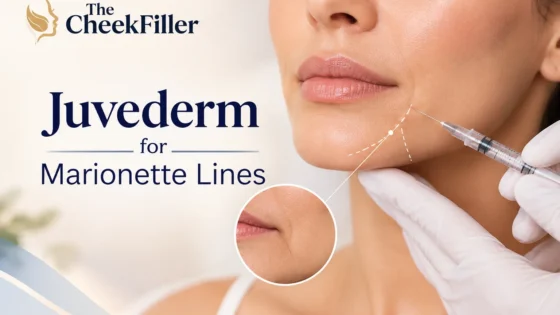
- Temples & Nasolabial Folds: Hollow temples can give the upper face a skeletal or tired appearance. Replenishing temporal fat loss re-balances facial proportions, while treating nasolabial and marionette lines softens deep shadows around the mouth.
The Treatment Journey: What to Expect Before, During, and After
Knowing what happens step-by-step during a dermal filler appointment helps alleviate anxiety and ensures a comfortable, smooth experience.
The Comprehensive Facial Assessment
Your treatment begins with a thorough clinical consultation. An experienced injector evaluates your facial bone structure, skin quality, dynamic muscle movement, and deep fat distribution. They will discuss your goals, review your medical history, check for contraindications, and design an individualized treatment plan tailored to your anatomical profile.
The Injection Process: Precision, Comfort, and Micro-Droplet Placement
After cleansing and marking target vectors, a topical numbing agent is applied to maximize comfort. Most modern premium fillers are formulated with lidocaine, a local anesthetic integrated directly into the gel matrix to numb the area as it is injected. Depending on the anatomy, the practitioner will use ultra-fine needles or blunt-tipped micro-cannulas—flexible tubes that navigate gently through tissue layers to minimize bruising, discomfort, and swelling. The physical injection process usually takes between 15 to 45 minutes.
Aftercare, Tissue Integration, and Settling Timelines
Immediately following your procedure, you may notice instantaneous volume improvement, accompanied by minor redness, localized tenderness, or mild swelling.
Over the following 14 to 21 days, the injected gel undergoes tissue integration. During this phase, initial swelling subsides and the HA gel draws in natural water molecules, settling seamlessly into your facial tissue. Adhering to simple aftercare guidelines—such as avoiding intense heat, heavy exercise, and aggressive facial massage for 24 to 48 hours—ensures optimal settling.
Safety, Longevity, and Avoiding the “Overfilled” Look
While dermal fillers are safe when administered by qualified medical professionals, achieving beautiful, long-lasting results requires a firm understanding of safety protocols and facial mechanics.
- Complete Reversibility with Hyaluronidase: One of the greatest safety nets of Hyaluronic Acid fillers is that they are not permanent. If you ever dislike your results or experience an asymmetric outcome, the enzyme hyaluronidase can be injected to dissolve the product safely and quickly within 24 to 48 hours.
- Understanding True Product Longevity: Depending on cross-linking density, placement depth, and your personal metabolic rate, HA fillers typically last between 6 to 18 months. Highly mobile areas like the lips metabolize product faster than stationary deep planes like the cheekbones or jawline.
- Preventing “Filler Fatigue” and Migration: Overfilling an area or treating too frequently can cause product migration or a heavy, unnatural look often described as “pillow face”. Natural rejuvenation relies on micro-restoration—placing precise, minimal quantities in strategic anchor points to maintain your natural features.
- Anatomic Mastery and Vascular Safety: Safe injecting requires deep medical knowledge of facial anatomy, including the exact depth and path of facial arteries. Experienced practitioners use aspiration techniques, slow low-pressure injections, and micro-cannulas to protect blood vessels and ensure complete safety throughout the procedure.
Embracing Natural Facial Rejuvenation
Dermal fillers are far more than just a cosmetic trend, they are sophisticated biological tools capable of re-establishing youth, structural balance, and vibrant skin health when guided by expert hands. The ultimate goal of filler treatment is never to transform you into someone else, but to restore the natural contours, structural support, and fresh energy that time has softened.
By understanding how different materials interact with your anatomy, choosing high-quality reversible gels, and partnering with an experienced clinical practitioner, you can enjoy subtle, elegant, and completely natural results.
Ready to discover how tailored midface structural support can transform your facial balance? Explore our specialized guides and treatment insights at The Cheek Filler to take the next step in your aesthetic journey with absolute confidence.
Written and reviewed by the content team at The CheekFiller | Last updated October 2026
AI tools assisted with the initial draft. Our team reviewed and edited the content for clarity, accuracy, and reader usefulness.
Considering treatment?
Browse injectors in our directory and compare their training, treatments and location before you book a consultation.