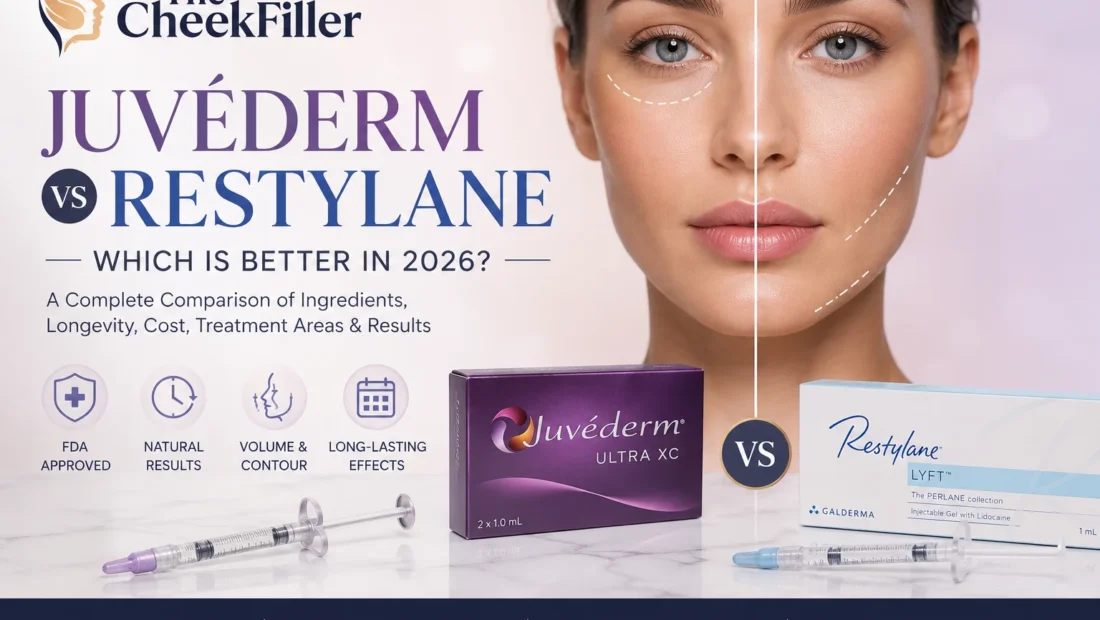
If you’re scrolling through before-and-after photos, dreaming about plumper lips or lifted cheeks, you’ve probably come across the big question: Juvederm or Restylane? These two hyaluronic acid fillers dominate the U.S. aesthetic market for good reason, both deliver beautiful, natural-looking results with minimal downtime. But they’re not exactly the same.
Think of them as talented cousins with different personalities. Juvederm (from Allergan) tends to feel smoother and more gel-like, blending seamlessly for that soft, hydrated volume many people love in lips and cheeks. Restylane (from Galderma) often has a slightly firmer, more structured feel, which shines when you want precision, like under the eyes or sharper definition.
The truth? Neither is universally “better.” The best choice depends on your facial anatomy, the area you want to treat, and the look you’re going for. Some people even benefit from a combination of both. In this guide, we’ll break down the real differences in texture, longevity, cost, and ideal treatment areas so you can walk into your consultation feeling confident and informed.
What Are Juvederm and Restylane?
Juvederm
Juvederm is produced by Allergan (now part of AbbVie), the same company behind Botox. It’s famous for its smooth, silky consistency that integrates beautifully into facial tissue. Many patients love how it delivers soft, natural-looking volume, especially in the lips and mid-face. The line includes specialized formulas like Voluma for cheek lifting, Volbella for subtle lip enhancement, and Vollure for smoothing smile lines.
Restylane
Restylane, on the other hand, comes from Galderma and has been a pioneer in the filler world since receiving FDA approval back in 2003. It uses different technologies (like NASHA and XpresHAn) that often give it a slightly firmer or more flexible texture depending on the product. This makes it a go-to choice for areas needing more structure or precision, such as under-eye hollows (with their FDA-approved Eyelight), tear troughs, or defining the jawline and lips with products like Kysse.
Juvederm vs Restylane: Key Similarities and Differences
When patients sit across from me during consultations, they often ask the same thing: “Aren’t these two basically the same?” The short answer is no – but they do share more similarities than differences. Understanding where they overlap and where they diverge helps you make a smarter choice and sets realistic expectations for your results.
Both Juvederm and Restylane are premium hyaluronic acid (HA) dermal fillers, FDA-approved, and considered extremely safe when performed by qualified injectors. They work by attracting and holding water to restore lost volume, soften wrinkles, and enhance facial contours. Results appear almost immediately, require little to no downtime, and can be reversed if necessary. Most importantly, when placed skillfully, both brands help you look refreshed and natural rather than “done.”
How Are Juvederm and Restylane Different?
While they belong to the same category of injectable fillers, their formulations behave differently once injected. These nuances affect how long they last in certain areas, how they feel to the touch, and which facial zones they suit best. The differences come down to how the hyaluronic acid molecules are processed during manufacturing, something that influences everything from integration to longevity.
Ingredients and Formulation: HA Concentration and Cross-Linking Technology
Both products use non-animal-sourced hyaluronic acid as their primary ingredient, so allergy risks remain very low. However, the way manufacturers stabilize and cross-link those HA molecules sets them apart.
Juvederm primarily relies on Vycross or Hylacross technology. These methods blend different molecular weights of HA, creating a smoother, more cohesive gel. Some formulations have a slightly higher HA concentration, which can contribute to excellent water-binding capacity and, in certain products, longer duration.
Restylane uses NASHA (Non-Animal Stabilized Hyaluronic Acid) technology in many products, along with XpresHAn for more dynamic movement. This creates a gel that tends to hold its shape more firmly in place. The result is often more predictable projection and structure, which many experienced injectors appreciate for precise contouring.
Texture and Consistency: Smooth Gel vs Granular Gel
This is where patients usually notice the biggest practical difference during and after treatment.
Juvederm generally feels silkier and more gel-like. It flows easily and integrates smoothly into surrounding tissue, which often translates to a softer, more blended finish, ideal when you want that pillowy lip look or natural cheek volume.
Restylane products can feel slightly firmer or more granular depending on the specific formula. This texture helps the filler stay where it’s placed, offering better structure and less migration in delicate or high-movement zones like the under-eye area or along the lip border.
Neither texture is inherently superior. The real art lies in matching the right product to your anatomy and goals. A skilled provider might even use Juvederm in one area and Restylane in another during the same session for optimal results.
Juvederm vs Restylane: Full Comparison Table
The comparison table below highlights the key differences to help you better understand which filler family may align with your cosmetic goals.
| Aspect | Juvederm | Restylane |
| Core ingredient | Hyaluronic acid–based dermal filler designed to add volume and smooth lines | Hyaluronic acid–based dermal filler focused on volume, support, and definition |
| Overall feel | Generally smooth, cohesive gel that blends easily for soft, seamless results | Often slightly more structured, allowing for precise shaping and contour |
| Common treatment areas | Lips, nasolabial folds, marionette lines, cheeks, mid‑face rejuvenation | Lips, tear troughs, cheeks, jawline, chin, fine lines and folds |
| Typical look/finish | Soft, pillowy volume with an emphasis on a blended, natural appearance | Defined, supported contours with an emphasis on shape and structure |
| Product range focus | Multiple formulas tailored for smoothing folds, adding lip volume, and lifting cheeks | Broad portfolio with options for subtle refinement, lift, and detailed contouring |
| Longevity | Often around several months up to over a year, depending on product and area | Similar overall range, with duration varying by specific Restylane product and placement |
| Ideal candidate profile | Someone seeking soft, plump lips or gently refreshed mid‑face with minimal edges | Someone wanting more sculpted cheeks, under‑eye support, or sharper jawline definition |
| Injection experience | Smooth injection in many areas; often favored for blending and soft transitions | Can feel slightly firmer when injected; often chosen for precision placement and support |
| Safety and reversibility | Widely used, well‑studied; effects are reversible with hyaluronidase if needed | Equally well‑established; also reversible with hyaluronidase under medical supervision |
| Best used when… | You want a plush, hydrated, “airbrushed” look to lips or folds without strong lines | You want lift, structure, or targeted definition in features like cheeks, chin, or jaw |
Best Treatment Areas for Juvederm vs Restylane
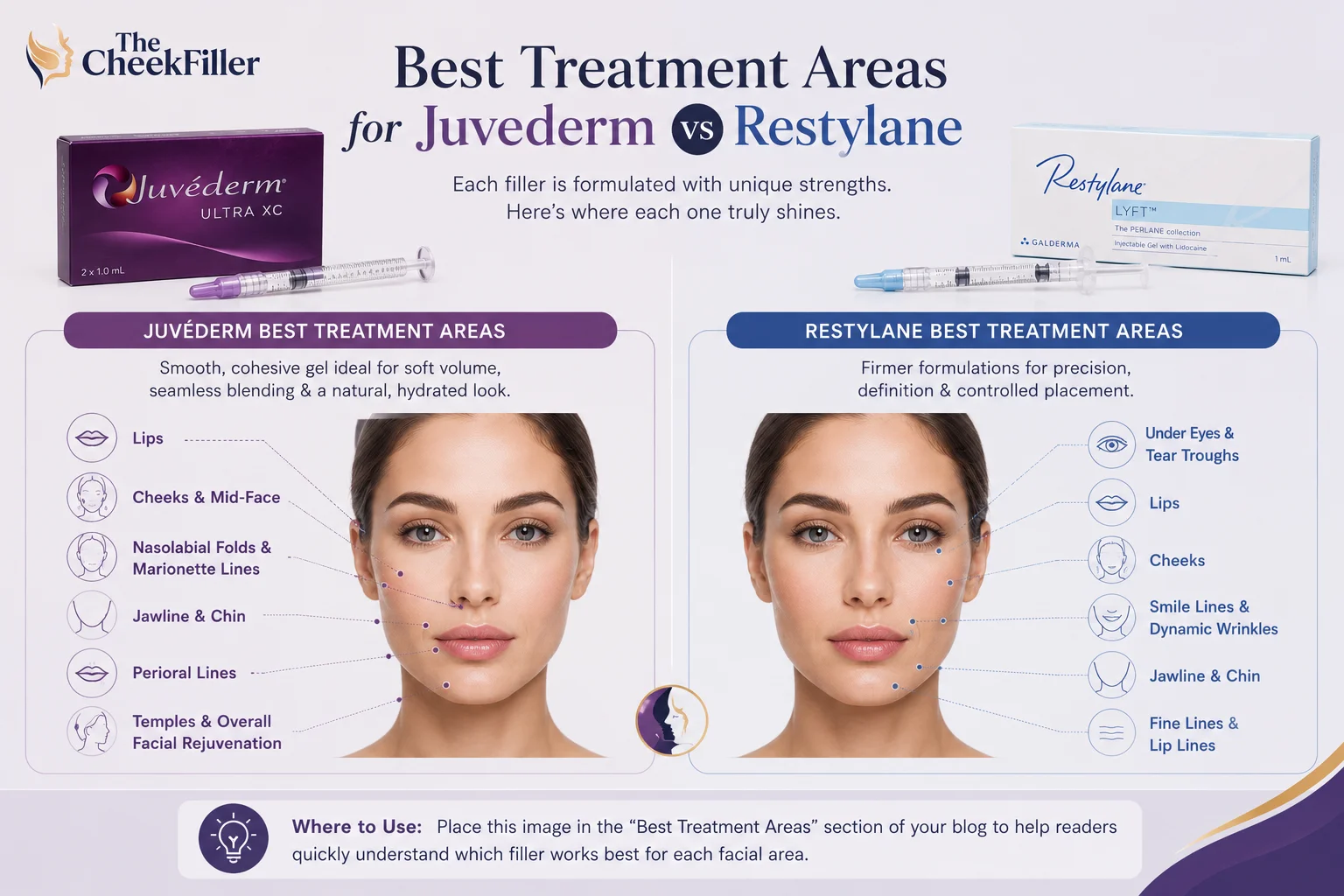
Choosing the right filler isn’t just about the brand, it’s about matching the product’s characteristics to your specific needs and facial anatomy. After treating hundreds of patients with both lines, I’ve learned that each excels in certain zones. Here’s a side-by-side look at their strengths.
Juvederm Best Treatment Areas
Juvederm’s smooth, cohesive gel makes it ideal for soft volume, seamless blending, and areas where a natural, hydrated feel is the priority.
- Lips
- Cheeks & Mid-Face
- Nasolabial Folds & Marionette Lines
- Jawline & Chin
- Perioral Lines
- Temples & Overall Facial Rejuvenation
Restylane Best Treatment Areas
Restylane’s firmer, more structured (or flexible) formulations shine when precision, definition, and controlled placement matter most.
- Under Eyes & Tear Troughs
- Lips
- Cheeks
- Smile Lines & Dynamic Wrinkles
- Jawline & Chin
- Fine Lines & Lip Lines
Cost Comparison: Juvederm vs Restylane Pricing
On average, both Juvederm and Restylane fall within a similar price range across most U.S. markets. You can typically expect to pay $550 to $950 per syringe, depending on your location, the provider’s expertise, and the specific product chosen. High-cost cities like New York, Los Angeles, or Miami often sit at the upper end, while Midwest or Southern clinics tend to be more affordable.
How the Pricing Usually Breaks Down
- Juvederm products (Voluma, Volux, Vollure, Volbella): Often priced slightly higher, usually $650–$1,000 per syringe. The premium comes from strong brand recognition and longer duration in certain formulas, especially cheek and jawline treatments.
- Restylane products (Kysse, Contour, Lyft, Eyelight, Defyne): Generally range from $550–$900 per syringe. Some patients find Restylane options feel more budget-friendly for lip and under-eye treatments.
Keep in mind these are national averages. What really affects your final cost includes:
- The injector’s skill level and reputation (board-certified dermatologists or plastic surgeons usually charge more)
- Geographic location and clinic overhead
- How many syringes you need
- Any package deals or membership programs many medspas offer
Side Effects and Safety: What to Expect
When considering any injectable treatment, it’s completely normal to wonder about safety and what recovery actually looks like. The good news is that both Juvederm and Restylane have excellent safety profiles when performed by qualified, experienced injectors. As hyaluronic acid fillers, they’re among the most studied and trusted options in aesthetic medicine today.
Here’s what most patients experience in real life:
- Common, temporary side effects (same for both brands): Mild swelling, bruising, redness, or tenderness at the injection sites. These usually peak within the first 24–48 hours and resolve within 3–7 days for most people. Lips tend to swell more than other areas, so plan accordingly.
- Juvederm-specific notes: Because some formulas attract more water, you might notice slightly more initial swelling compared to Restylane. This is usually most noticeable in the lips and cheeks but settles nicely within a week.
- Restylane-specific notes: Many patients report less immediate puffiness, especially in delicate zones like under the eyes. Its firmer texture can sometimes cause a bit more tenderness right after injection, but it often settles with minimal visible swelling.
- Rare but possible risks: Lumps, asymmetry, vascular complications, or allergic reactions. These are uncommon when working with licensed medical professionals who understand facial anatomy deeply. Both fillers are fully reversible with hyaluronidase, which adds an important safety net.
Final Words!
A well-done filler treatment is never just about the product; it’s about choosing the right tool, for the right face, in the right hands. Juvederm and Restylane both offer excellent, FDA‑approved options for smoothing lines, restoring volume, and enhancing features, but they shine in slightly different ways depending on your anatomy and goals. Instead of trying to “pick a winner,” the most helpful approach is to understand how each filler family behaves, then work with a qualified injector to build a plan that feels natural, safe, and aligned with what you actually want to see in the mirror.
At The Cheek Filler, the focus is always on subtle, flattering results rather than overfilled, obvious changes. Get a personalized consultation from experts now!
Considering treatment?
Browse injectors in our directory and compare their training, treatments and location before you book a consultation.