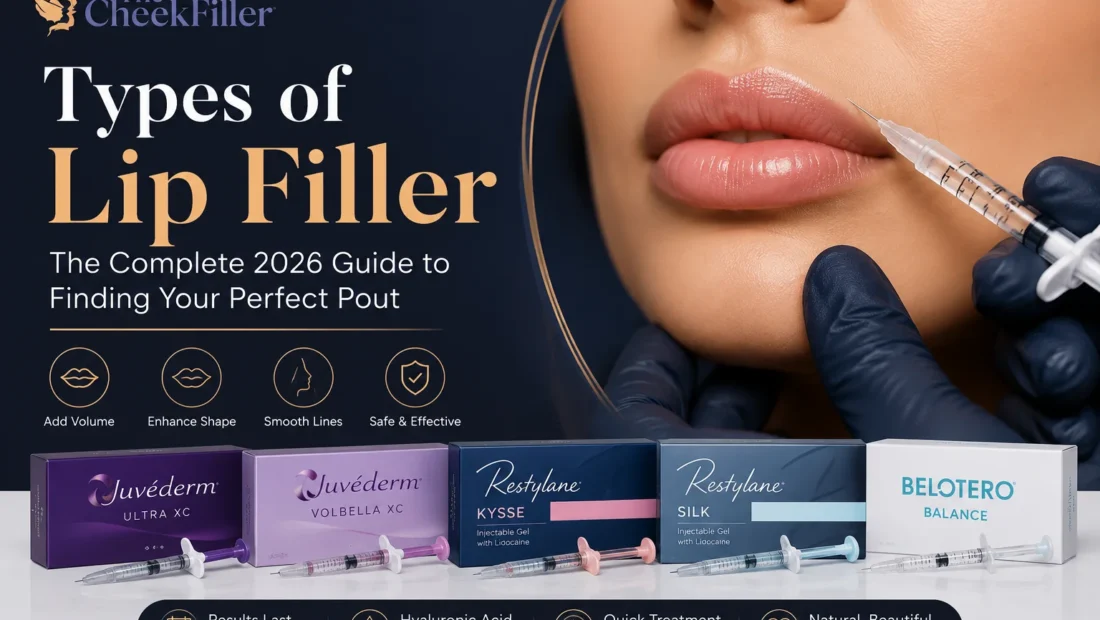
If you’ve ever caught yourself staring at your reflection, wondering whether your lips could use a little more definition, a touch of volume, or simply a smoother, more youthful appearance. You’re not alone. Lip augmentation has quietly become one of the most requested cosmetic procedures worldwide, and for good reason. A well-done lip enhancement doesn’t just change your lips; it can subtly transform your entire face, balancing proportions and boosting confidence in ways that feel surprisingly natural.
But here’s the thing most people don’t realize until they start researching: not all lip fillers are created equal. Walk into any med spa or dermatology clinic, and you’ll likely be presented with a menu of options that sounds more like a wine list than a medical procedure. Juvéderm Volbella, Restylane Kysse, Belotero Balance, collagen, fat transfer, permanent fillers, the choices can feel too much, especially when you’re trying to figure out which one actually matches your goals, your budget, and your comfort level.
What Are Lip Fillers?
Lip fillers are injectable substances designed to add volume, improve shape, smooth fine lines around the mouth, and restore definition to the lip border (that crisp edge between your lip and skin). Think of them as a customizable sculpting tool for one of the most expressive features on your face.
Hyaluronic Acid (HA) Lip Fillers: The Gold Standard
If you’re researching lip fillers for the first time, you’ll quickly notice that hyaluronic acid fillers dominate the conversation. HA is biocompatible, temporary, and, as mentioned, completely reversible if something goes wrong. That combination of safety, flexibility, and predictability makes HA the undisputed champion of lip augmentation.
But not all HA fillers feel the same. The texture, firmness, and behavior of an HA filler depend on something called cross-linking technology, essentially how the manufacturer bonds the hyaluronic acid molecules together. More cross-linking creates a firmer, more structured gel that holds its shape well (great for definition and volume). Less cross-linking produces a softer, more fluid gel that spreads easily and integrates seamlessly (ideal for subtle smoothing and hydration).
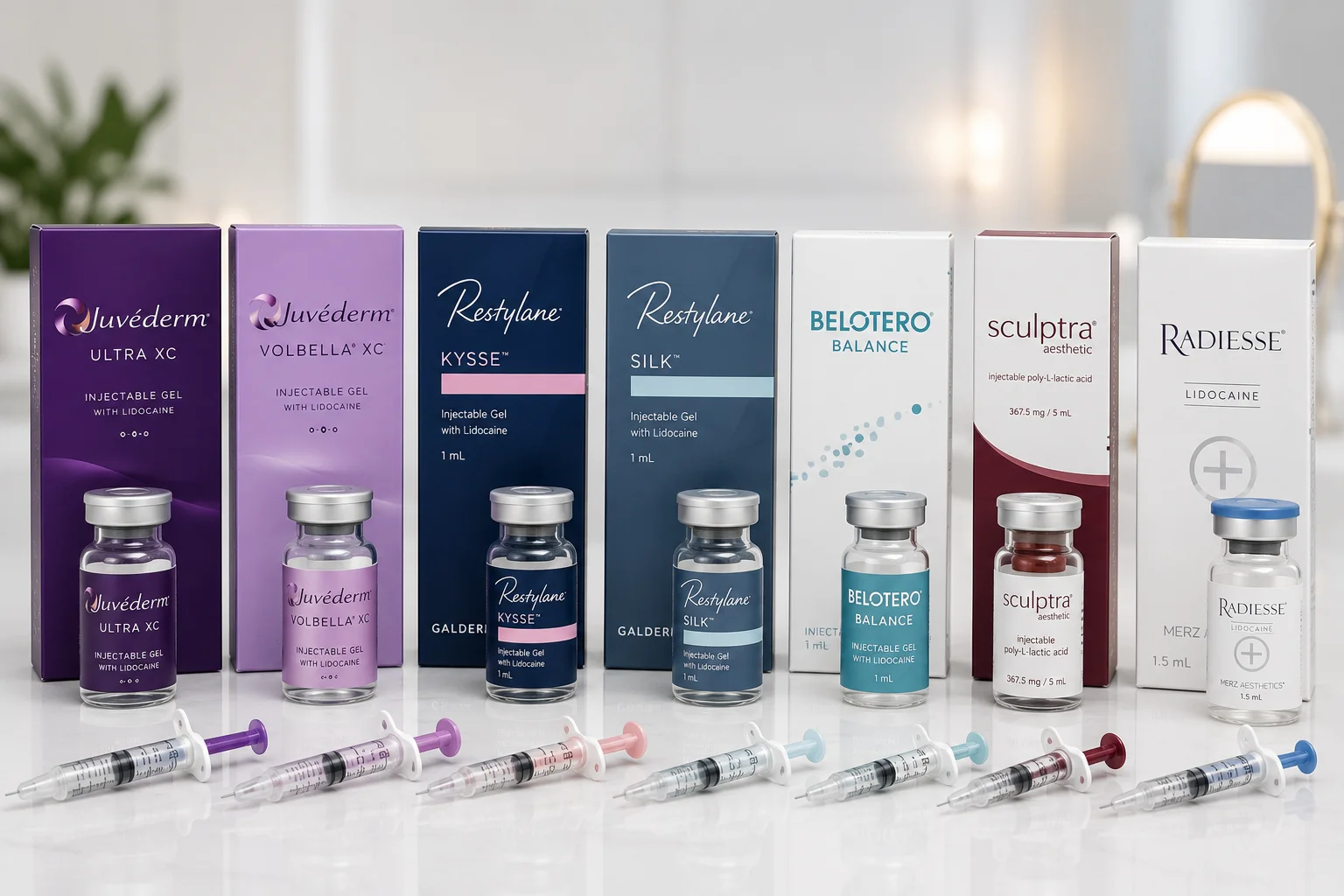
Within the HA family, three major brands dominate the market: Juvéderm (by Allergan Aesthetics), Restylane (by Galderma), and Belotero (by Merz Aesthetics). Each has its own proprietary technology, texture profile, and ideal use cases. Let’s break them down.
Juvéderm Lip Filler Options Explained
Juvéderm has been around since 2006 and remains one of the most recognized names in aesthetic medicine. The brand’s signature technology is called Vycross, which blends different molecular weights of hyaluronic acid to create a smooth, cohesive gel that integrates beautifully into the tissue.
For lips, Juvéderm offers several products, but two stand out:
Juvéderm Volbella is the subtle artist of the family. It’s a low-viscosity, soft gel designed for fine lines, subtle volume, and refining the lip border without dramatically changing size. If your goal is to smooth out vertical lip lines (often called “smoker’s lines” even if you’ve never smoked), restore a bit of hydration, or achieve a very natural “my lips but better” look, Volbella is often the go-to. Results typically last up to 12 months, and because it’s so soft, swelling tends to be minimal.
Juvéderm Ultra (or Ultra XC) is the volume builder. It’s a mid-viscosity gel with more structure, making it ideal for patients who want noticeable fullness, better projection, and that classic “pout” effect. It has a smooth, cohesive consistency that feels natural when you move your lips, talking, smiling, kissing. Ultra tends to create a bit more initial swelling than Volbella, but that usually settles within a week. Longevity is similar, around 9 to 12 months depending on your metabolism.
Restylane Lip Filler Options Explained
Restylane, developed by Galderma, has been FDA-approved since 2003 and carries a reputation for precision and definition. While Juvéderm is often described as “soft and smooth,” Restylane is frequently praised for its ability to create crisp, structured shapes, think sharp Cupid’s bows, well-defined vermilion borders, and elegant, architectural lip enhancements.
Restylane’s proprietary technology is called NASHA (Non-Animal Stabilized Hyaluronic Acid), which creates a firmer gel with more “lift” capacity. For lips, the standout products are:
Restylane Silk is specifically designed for subtle enhancement and fine detail work. It has a granular, slightly firmer texture that makes it excellent for defining the lip border, correcting asymmetries, and addressing age-related thinning in mature lips. Because it’s less about volume and more about structure, Silk is often the choice for patients in their 40s, 50s, and beyond who want to restore what time has softened without looking “done.” Results typically last 6 to 9 months.
Restylane Kysse is the newer star of the lineup, and it’s been a game-changer for patients who want both volume and natural movement. Kysse uses Optimal Balance Technology (OBT), which gives the gel flexibility, it moves with your lips when you talk, smile, or laugh, rather than sitting rigidly in place. This makes it perfect for people who are on camera a lot, public speakers, or anyone who wants fullness without stiffness. Kysse also tends to last longer than Silk, with results holding up to 12 months or more in many patients.
Restylane Refyne is another option sometimes used in the perioral area (around the mouth) for patients who want to address marionette lines or nasolabial folds in addition to lip enhancement. Its flexible formulation is designed for areas with lots of movement.
Belotero and Other HA Lip Filler Brands
While Juvéderm and Restylane get most of the attention, Belotero (by Merz Aesthetics) deserves a spotlight, especially if your goal is ultra-natural refinement rather than dramatic volume.
Belotero Balance uses a unique formulation called Cohesive Polydensified Matrix (CPM) technology, which creates a very soft, low-density gel that integrates almost invisibly into the superficial layers of the skin. This makes it exceptional for:
- Smoothing fine vertical lines around the lips
- Soft, subtle enhancement of the lip border
- Patients with very thin skin who are prone to visible filler show-through
- Creating a “barely there” improvement that no one can pinpoint
Belotero is often described as the “invisible” filler because it doesn’t create visible lumps or a bluish tint (known as the Tyndall effect) even when placed superficially. However, because it’s so soft and integrates so completely, it doesn’t provide much structural support or significant volume. It’s best for patients who want gentle smoothing and hydration rather than a size increase. Results typically last 6 to 9 months.
Belotero Lips is a newer, lip-specific line that includes Belotero Lips Shape (for controlled volume) and Belotero Lips Contour (for definition and border refinement). When used together, they create a modular system that allows practitioners to customize both volume and shape with high precision.
Other notable HA brands include:
- Teosyal Kiss / RHA (by Teoxane Laboratories): A Swiss-engineered line known for its “Resilient Hyaluronic Acid” that adapts to facial movements. RHA fillers are particularly popular in Europe and are gaining traction in the US for dynamic, expressive lips.
- Stylage Special Lips (by Laboratoires Vivacy): A French brand that includes mannitol, an antioxidant that helps reduce swelling and oxidative stress. It’s designed for natural, moist volume rather than dramatic enlargement.
- Revanesse Versa: Known for its smooth consistency and minimal swelling profile, making it a solid choice for subtle enhancement with less downtime.
The truth is, the “best” brand isn’t a brand at all, it’s the specific product within that brand, matched to your unique lip anatomy, skin thickness, and aesthetic goals by a skilled injector.
Collagen Lip Fillers: Pros and Cons
Before hyaluronic acid fillers took over the market, collagen was the go-to substance for lip augmentation. Derived from bovine (cow) or human sources, collagen fillers like Zyderm and Zyplast were the standard throughout the 1980s and 1990s.
How they work: Collagen is a structural protein that provides support and elasticity to your skin. When injected into the lips, it adds volume and can improve definition. However, unlike HA fillers, collagen doesn’t attract water, so the volume increase is purely from the injected material itself.
The pros: Collagen fillers can create a very natural, soft feel. Some patients and practitioners still appreciate collagen for specific applications, particularly in older patients who may have unique tissue characteristics.
The cons: This is where collagen really shows its age. First, collagen requires allergy testing before treatment because bovine collagen can trigger immune reactions in some patients. Second, collagen is not reversible, if you don’t like the result, you’re stuck with it until it naturally breaks down (typically 3 to 6 months). Third, it tends to last shorter than modern HA fillers. Fourth, and most importantly, collagen fillers have been largely phased out of mainstream aesthetic practice because HA alternatives are safer, longer-lasting, and far more versatile.
In 2026, you’re unlikely to find many reputable providers offering collagen for lip augmentation. The technology has simply been surpassed. If someone suggests collagen for your lips, it’s worth asking why they’re recommending an outdated option when superior alternatives exist.
Fat Transfer Lip Injections: A Semi-Permanent Alternative
Fat transfer (also called autologous fat grafting) offers a compelling alternative.
How it works: Your surgeon harvests fat from another area of your body using liposuction. The fat is then purified and carefully injected into your lips in small amounts. Because it’s your own tissue, there’s virtually no risk of allergic reaction or rejection.
Results are semi-permanent. While not all transferred fat survives (typically 50% to 70% “takes”), the fat that does establish a blood supply can last for years, potentially forever. It feels completely natural because it is natural. There’s also the bonus of contouring another area of your body via the liposuction.
The cons: Fat transfer is surgery, not a quick office visit. It requires anesthesia, surgical facilities, and significantly more downtime, usually 1 to 2 weeks of noticeable swelling and bruising. The results are less predictable than HA fillers because you can’t control exactly how much fat will survive. You might need a second procedure to achieve your desired result. There’s also a risk of lumpiness or unevenness if the fat doesn’t distribute evenly.
Permanent Lip Fillers: Risks and Considerations
The idea of “permanent” lip fillers sounds appealing on the surface, one treatment, results forever, no maintenance. But in the world of aesthetic medicine, permanent fillers are widely considered the riskiest option for lip augmentation, and most experienced practitioners avoid them entirely.
Types of permanent fillers include:
- Silicone oil injections
- Polyacrylamide gel (Aquamid)
- Polymethyl methacrylate (PMMA) microspheres (Bellafill)
- Calcium hydroxylapatite (Radiesse)
Why permanent fillers are problematic for lips:
- The lips are highly mobile. You talk, eat, kiss, smile, and express emotions constantly. A permanent substance in this dynamic environment is prone to shifting, clumping, and creating unnatural distortions over time.
- Aging doesn’t stop. Your face will continue to change—skin will thin, bone structure will shift, tissue will sag. A permanent filler that looks good at 30 can look bizarre and misplaced at 50.
- Complications are permanent too. If you develop an infection, a granuloma, or vascular occlusion (a blocked blood vessel), the permanent filler makes treatment extremely difficult. With HA fillers, hyaluronidase can resolve most issues. With permanent fillers, surgical removal may be the only option, and that’s rarely clean or easy.
- Trends change. The “ideal” lip shape in 2026 might not be what you want in 2036. Permanent fillers lock you into a look that may not age well aesthetically.
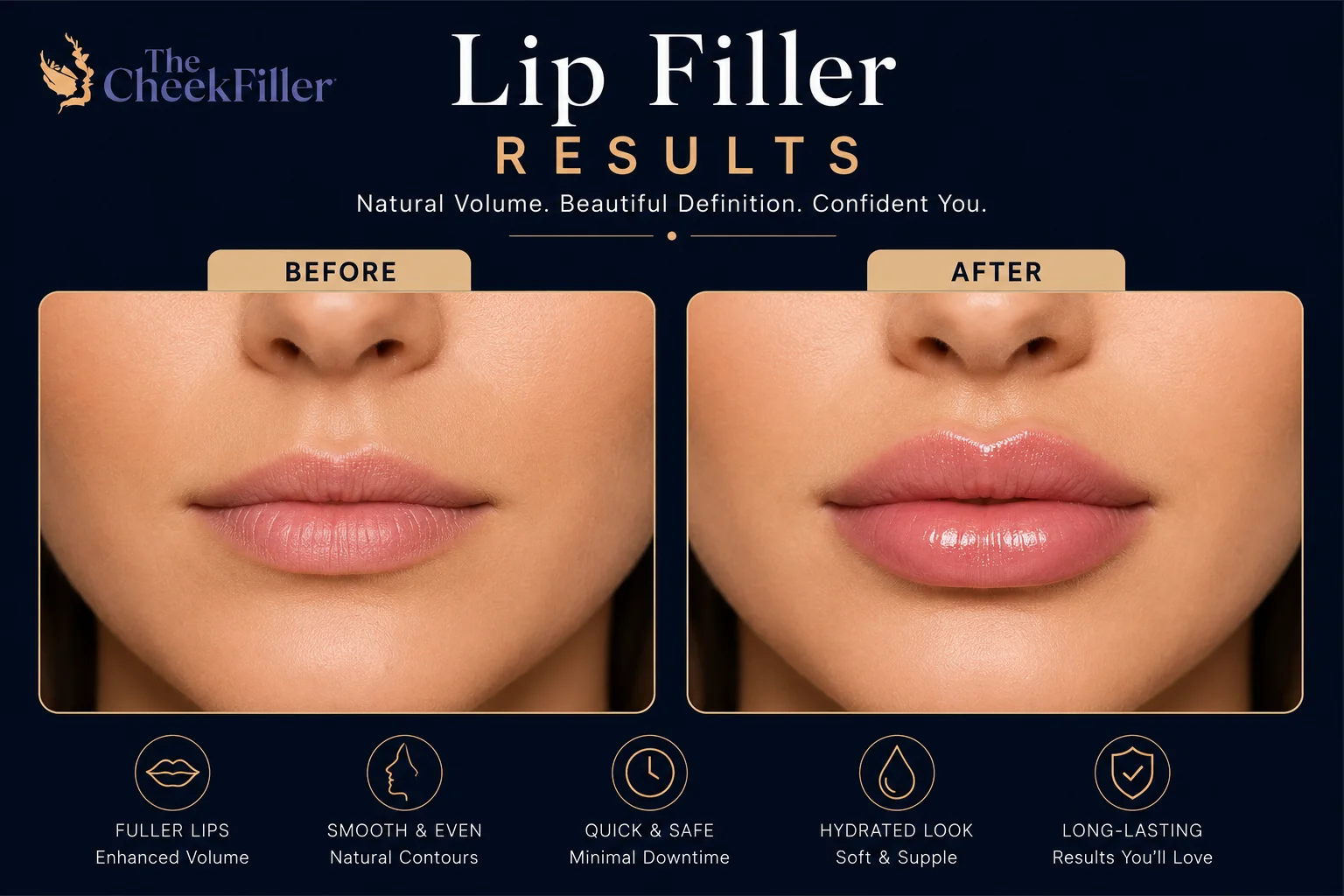
Before and After Results
How to Choose the Right Lip Filler for Your Goals
With so many options, how do you actually decide? The good news is that you don’t have to figure this out alone, a qualified injector will guide you through the selection process. But understanding the decision framework helps you have a more productive consultation and ensures your voice is heard.
Start with your goal, not the brand. Ask yourself:
- Do I want subtle enhancement or noticeable volume?
- Am I trying to restore what age has taken away, or create something new?
- Do I care most about shape and definition, or fullness and projection?
- Do I have thin skin that might show filler easily?
- Am I on camera frequently and need natural movement?
- Is this my first time, or am I refining previous results?
Choose your injector before your filler. A skilled practitioner with deep anatomical knowledge and an artistic eye is worth more than any brand name. Look for board-certified dermatologists, plastic surgeons, or experienced nurse practitioners/physician assistants with specialized training in facial aesthetics.
Consider your anatomy. Thin lips, asymmetrical lips, mature lips with lost volume, and lips with lots of natural movement all require different approaches.
Lip Filler Longevity: How Long Does Each Type Last?
Here’s a realistic breakdown by product type:
| Filler Type | Typical Longevity in Lips | Notes |
| Juvéderm Volbella | Up to 12 months | Soft, subtle; tends to last well |
| Juvéderm Ultra | 9–12 months | More volume = sometimes slightly shorter |
| Restylane Kysse | 9–12+ months | Flexible technology helps longevity |
| Restylane Silk | 6–9 months | Shorter due to softer, less cross-linked formula |
| Belotero Balance | 6–9 months | Very soft integration = faster breakdown |
| Belotero Lips | 6–9 months | Similar to Balance |
| Versa | 6–12 months | Variable; some patients report shorter duration |
| Teosyal Kiss / RHA | 9–12 months | Designed for durability in moving areas |
Factors that make filler last longer:
- Slower metabolism: Some people simply break down HA more slowly than others.
- Less lip movement: If you don’t talk excessively or have very animated expressions, filler may persist longer.
- Proper aftercare: Avoiding excessive heat, strenuous exercise, and alcohol for the first 48 hours helps the filler settle without premature breakdown.
- Conservative volumes: Smaller amounts tend to integrate better and last more predictably than overfilling.
Factors that make filler break down faster:
- High metabolism / very active lifestyle: Athletes and people with fast metabolisms often see shorter longevity.
- Frequent sun exposure: UV radiation accelerates the breakdown of hyaluronic acid.
- Smoking: Nicotine constricts blood vessels and can compromise filler longevity and skin quality.
- Excessive heat: Saunas, hot yoga, and intense sun exposure can speed up metabolism of the product.
Lip Filler Cost Comparison by Type
In the United States, a single syringe of HA lip filler typically ranges from $600 to $1,000, with a national average around $959. Premium products or injections by highly experienced, board-certified providers can push that closer to $1,200 or more per syringe. Most lip treatments require 1 to 2 syringes, though conservative first-time treatments might use as little as 0.5 mL.
Here’s a realistic cost breakdown by type and brand:
| Filler Type | Price Range (Per Syringe, US) | Typical Longevity | Cost Per Year (Approx.) |
| Juvéderm Volbella | $500 – $1,050 | 9–12 months | $500 – $1,050 |
| Juvéderm Ultra | $500 – $1,050 | 9–12 months | $500 – $1,050 |
| Restylane Kysse | $500 – $1,000 | 9–12+ months | $500 – $1,000 |
| Restylane Silk | $500 – $1,000 | 6–9 months | $670 – $1,330 |
| Belotero Balance | $300 – $900 | 6–9 months | $400 – $1,200 |
| Versa | $500 – $800 | 6–12 months | $500 – $1,000 |
| Teosyal Kiss | $600 – $900 | 9–12 months | $600 – $900 |
| Fat Transfer | $3,000 – $8,000+ | Semi-permanent (years) | Lower long-term |
| Collagen (if available) | $400 – $700 | 3–6 months | $800 – $2,800 |
Side Effects and Safety of Different Lip Filler Types
Any medical procedure carries risks, and lip fillers are no exception. However, when performed by a qualified provider using appropriate products, lip fillers are among the safest cosmetic procedures available. The key is understanding what to expect, what’s normal, and what’s a warning sign.
Common, expected side effects (usually resolve within days):
- Swelling
- Bruising
- Tenderness and sensitivity
- Lumps or bumps
- Asymmetry during healing
Less common but important risks:
- Infection
- Vascular occlusion
- Delayed-onset nodules
- Migration
- Tyndall effect
Safety by filler type:
- HA fillers (Juvéderm, Restylane, Belotero): Safest option. Reversible with hyaluronidase. Extensive safety data. Low risk of long-term complications.
- Collagen: Moderate risk due to potential allergic reactions. Requires allergy testing. Not reversible.
- Fat transfer: Surgical risks (anesthesia, infection, scarring from liposuction). Unpredictable results. No reversal option.
- Permanent fillers: Highest risk. Not recommended for lips. Potential for granulomas, migration, chronic inflammation, and difficult-to-treat complications.
Final Thoughts: Your Lips, Your Choice
Choosing the right lip filler comes down to your goals, lifestyle, and the look you want to achieve. Whether you prefer subtle volume, a defined cupid’s bow, or a soft smoothing effect, there’s a filler type tailored to your needs and an experienced provider makes all the difference. If you’re feeling unsure, start with a conservative option and build from there so your results stay natural and balanced.
At The Cheek Filler, we prioritize individualized consultations and safe techniques to help you pick the best filler for your lips and face. Our team listens to your concerns, explains the options clearly, and crafts results that complement your features rather than overpower them.
If you’re curious about which filler fits you best, book a consultation with The Cheek Filler. Small changes, thoughtfully applied, can make a big difference in confidence and appearance.
Disclaimer: This article is for educational purposes only and does not constitute medical advice. Always consult with a qualified healthcare provider before undergoing any cosmetic procedure. Individual results vary, and the information provided reflects general trends rather than guarantees.
Considering treatment?
Browse injectors in our directory and compare their training, treatments and location before you book a consultation.