
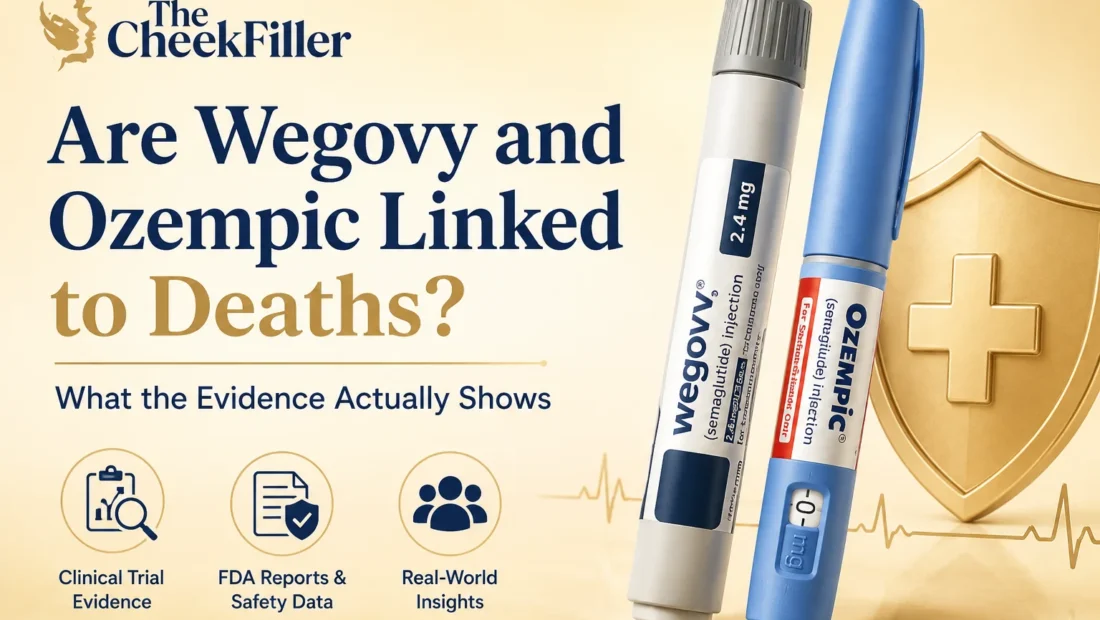
People keep asking the same question: are Wegovy and Ozempic actually killing people?
It’s not hard to see why. These drugs exploded in popularity for weight loss and diabetes, and with that came headlines about deaths, lawsuits, and scary side-effect reports. Some stories talk about hundreds of fatalities. Others point to rare but serious problems like pancreatitis that, in a few cases, turned fatal. At the same time, large clinical trials show these medications can lower the risk of dying from heart disease and other causes.
So which is it?
The short answer is that the picture is more complicated than either extreme. Reports of death appear in the FDA’s adverse event system and in media coverage, especially tied to severe gastrointestinal complications or, in some instances, compounded versions of the drugs. But those reports do not automatically prove the medication caused the death. Millions of people now take semaglutide (the active ingredient in both Wegovy and Ozempic), and the biggest controlled studies actually found fewer overall deaths among people on the drug compared with placebo.
This article looks at the real data, clinical trial results, post-marketing reports, and what regulators have said, so you can see where the evidence stands right now.
If you want to read about dermal filler, click the link: Dermal Filler

What the Clinical Trials Show About Mortality
The strongest evidence we have comes from large, carefully controlled studies. The biggest one for Wegovy is the SELECT trial. It enrolled more than 17,600 adults who already had cardiovascular disease and were overweight or obese, but did not have diabetes. Participants were randomly assigned to weekly semaglutide 2.4 mg or placebo and followed for roughly 3.3 years on average.
In that trial, 375 people (4.3%) in the semaglutide group died from any cause, compared with 458 (5.2%) in the placebo group. That works out to a 19% relative reduction in all-cause mortality (hazard ratio 0.81). Cardiovascular deaths were also lower, though the difference did not quite reach the pre-specified statistical threshold for that secondary endpoint. Non-cardiovascular deaths dropped as well, driven largely by fewer infectious deaths during the COVID period.
Other trials and pooled analyses of semaglutide have shown similar patterns: lower rates of major cardiovascular events and, in several analyses, lower overall mortality. These results come from randomized, double-blind studies with independent adjudication of outcomes. That design makes them far more reliable for determining cause-and-effect than spontaneous reports.
In short, when researchers carefully tracked thousands of people under controlled conditions, the drug was linked to fewer deaths, not more.
Post-Marketing Reports and Real-World Numbers
Once a drug reaches the market, anyone can report a suspected side effect to systems like the FDA’s Adverse Event Reporting System (FAERS) or the UK’s Yellow Card scheme. These reports are valuable for spotting possible signals, but they have clear limits.
In FAERS data covering recent years, thousands of reports list Ozempic or Wegovy. A portion of those reports include death as an outcome. One summary of Ozempic reports through early 2026 showed roughly 1,000 cases where the patient was reported to have died. Similar numbers appear for Wegovy when the data are examined separately. Older pharmacovigilance studies that looked across the GLP-1 class found elevated reporting rates for serious adverse events with some products, including Ozempic, but the signals for mortality itself were stronger with older drugs in the class than with the newer semaglutide products.
In the UK, Yellow Card data have shown dozens of fatal reports involving semaglutide and other GLP-1 medicines. Media stories in 2025 and 2026 sometimes framed the cumulative totals across the whole class as “more than 100 deaths” or higher. Regulators themselves are careful to note that a report does not prove the medicine caused the death. People taking these drugs often have diabetes, obesity, heart disease, or other conditions that already raise the risk of dying. Many reports also involve multiple medications or incomplete medical details.
Are you interested in cheek filler? Stay connected: Cheek Fillers
Understanding What These Numbers Mean
Spontaneous reporting systems do not measure how common an event is. They only record what someone chose to report. Millions of prescriptions have been written for these medicines. A few hundred or even a thousand death reports across years of widespread use does not, by itself, establish that the drugs are causing a large number of fatalities. Causality requires more detailed medical records, timing, alternative explanations, and preferably controlled comparisons.
That said, the reports are not meaningless. They have helped surface rare but serious problems that clinical trials, with their limited size and duration, can miss.
Specific Concerns: Pancreatitis and Other Serious Events
The clearest serious risk listed on the labels is acute pancreatitis. The FDA prescribing information for both Ozempic and Wegovy states that acute pancreatitis, including fatal and non-fatal hemorrhagic or necrotizing forms, has been observed with GLP-1 receptor agonists, including semaglutide. In clinical trials the rates were low—on the order of 0.2 to 0.3 cases per 100 patient-years but higher than placebo in some studies.
Post-marketing reports have included cases of severe pancreatitis that led to multi-organ failure and death. A small number of coroner’s findings and case reports have listed a GLP-1 drug as a contributing factor. UK data through late 2025 recorded more than a thousand pancreatitis reports across the class, with a subset described as fatal or necrotizing. Regulators in the UK strengthened the warnings on product information in early 2026 to emphasize that while uncommon, severe and occasionally fatal cases have occurred.
Other post-marketing signals that have drawn attention include gastrointestinal problems that can become severe (ileus, obstruction, dehydration), gallbladder disease, and rare reports of ischemic optic neuropathy. These are important to monitor, but they remain uncommon relative to the number of people treated.
What Regulators Have Said
The FDA continues to list both drugs as approved and beneficial for their indicated uses. The labels carry a boxed warning about thyroid C-cell tumors seen in rodents (relevance to humans is unknown) and clear warnings about pancreatitis, gallbladder disease, and other risks. The agency has also issued a warning letter to Novo Nordisk in 2026 about shortcomings in how the company investigated and reported certain adverse events, including some deaths. That letter focused on process failures in post-marketing surveillance, not on a determination that the drugs caused those specific deaths.
In the UK, the MHRA has repeatedly stated that reports of death do not automatically mean the medicine was responsible. After reviewing data on suicidal thoughts, the agency concluded the evidence did not support a causal link. On pancreatitis, it updated the product information to highlight the potential for severe outcomes while still regarding the overall benefit-risk balance as favorable for approved uses.
Neither agency has withdrawn the drugs or restricted them solely because of mortality concerns. Both continue to monitor ongoing data.
Compounded Versions and Other Variables
Some reported deaths and hospitalizations have involved compounded (non-brand) versions of semaglutide. These products are not FDA-approved, can vary in quality and concentration, and have been the subject of separate safety alerts. Distinguishing problems with approved products from problems with unregulated copies is important when looking at the overall picture.
Patient factors also matter. Many people prescribed these medicines already face elevated risks from obesity, diabetes, or cardiovascular disease. Rapid weight loss itself can sometimes contribute to gallbladder issues or other complications. Dose escalation and individual tolerance play roles as well.
Putting the Evidence in Perspective
When you line up the sources side by side, a consistent pattern emerges:
- Large randomized trials show a reduction, not an increase, in overall mortality.
- Post-marketing systems contain reports of death, some involving serious gastrointestinal or pancreatic events.
- Regulators acknowledge rare but real risks of severe pancreatitis and continue to require clear warnings.
- The absolute number of death reports, while concerning to patients and families, remains small relative to the scale of use.
- Causality in individual cases is often difficult to prove or disprove with the information available in spontaneous reports.
The drugs are not risk-free. No effective medicine is. At the same time, the best-controlled evidence we have does not support the idea that they are broadly linked to excess deaths. For many people with obesity and cardiovascular risk, the data point in the opposite direction.
What This Means for Patients
Anyone considering or already taking Wegovy or Ozempic should discuss the full picture with their clinician. That conversation should cover personal risk factors (history of pancreatitis, gallbladder disease, severe gastrointestinal problems), the expected benefits for weight and heart health, and the practical steps for monitoring.
If severe, persistent abdominal pain develops medical attention is needed right away. That symptom pattern is the classic warning for pancreatitis. Patients should also report any unusual or serious symptoms through official channels so that regulators can continue to refine the safety profile.
The evidence is still evolving. New studies, longer follow-up, and better real-world data will keep clarifying the balance of benefits and risks. For now, the most reliable picture is the one that combines the trial results showing mortality benefit with the post-marketing recognition that rare, serious, and occasionally fatal complications can occur.
Conclusion!
The question of whether Wegovy and Ozempic are linked to deaths does not have a simple yes-or-no answer. Large, well-designed clinical trials consistently show that semaglutide reduces the risk of dying from cardiovascular causes and from any cause in high-risk patients. At the same time, post-marketing reports document cases of death, some involving severe pancreatitis or other serious complications. Regulators on both sides of the Atlantic acknowledge these rare but real risks while continuing to view the overall benefit-risk balance as favorable for approved uses.
What matters most is context. Association in a spontaneous report is not the same as proven causation. Millions of people take these medications, many of whom already carry elevated health risks from obesity, diabetes, or heart disease. The absolute number of reported deaths remains small relative to the scale of use, and the best controlled evidence points toward a net reduction in mortality for appropriate patients.
Anyone considering or currently using these drugs should have an open conversation with their doctor about personal risk factors, warning symptoms (especially severe abdominal pain), and ongoing monitoring. Staying informed with reliable sources, rather than headlines alone, remains the most practical way to navigate the evidence as it continues to develop.
For clearer, evidence-based health content and practical guidance, visit The Cheek Filler.
References
- Lincoff AM et al. Semaglutide and Cardiovascular Outcomes in Obesity without Diabetes. N Engl J Med. 2023.
- Scirica BM et al. The Effect of Semaglutide on Mortality and COVID-19–Related Deaths: An Analysis From the SELECT Trial. J Am Coll Cardiol. 2024.
- FDA prescribing information for Wegovy (semaglutide) and Ozempic (semaglutide).
- FDA Adverse Event Reporting System (FAERS) public data summaries.
- MHRA Drug Safety Update on GLP-1 receptor agonists and acute pancreatitis (January 2026).
- MHRA Yellow Card scheme data summaries reported in BMJ and official communications.
- FDA warning letter to Novo Nordisk Inc., March 2026, regarding postmarketing adverse event reporting.
- Pharmacovigilance analyses of GLP-1 receptor agonists using FAERS (various peer-reviewed studies 2024–2025).
Considering treatment?
Browse injectors in our directory and compare their training, treatments and location before you book a consultation.