If you’ve ever stared into a magnifying mirror and wondered why your undereye area looks tired no matter how much sleep you get, you’re not imagining things. Hollowing under the eyes, that shadowy, sunken look, is one of the most common (and most frustrating) signs of facial aging. And until now, treating it well has been surprisingly tricky.
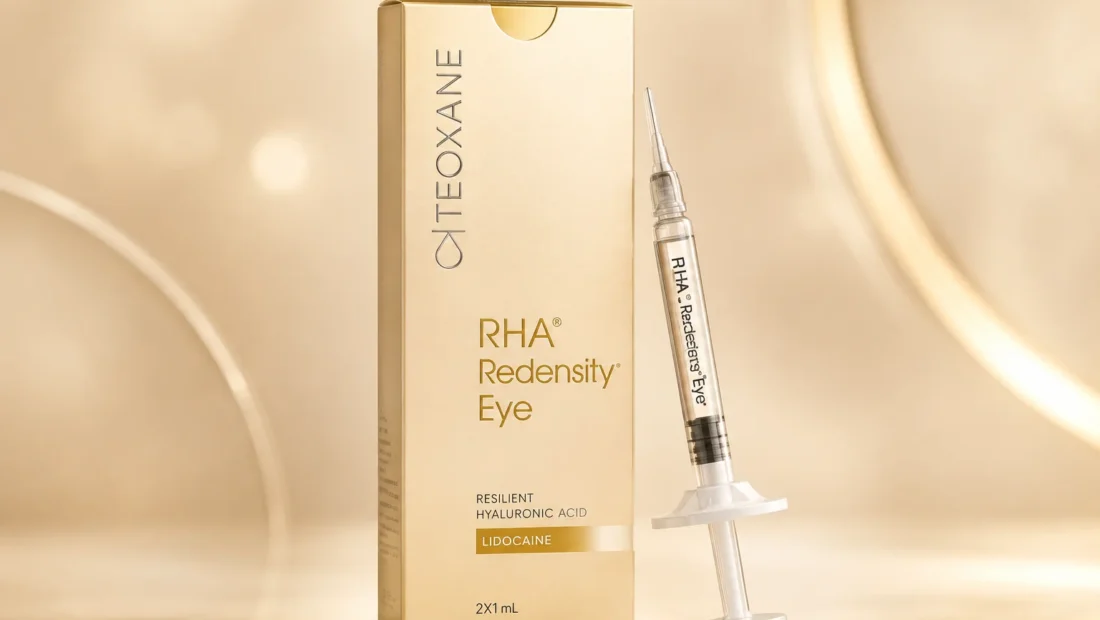
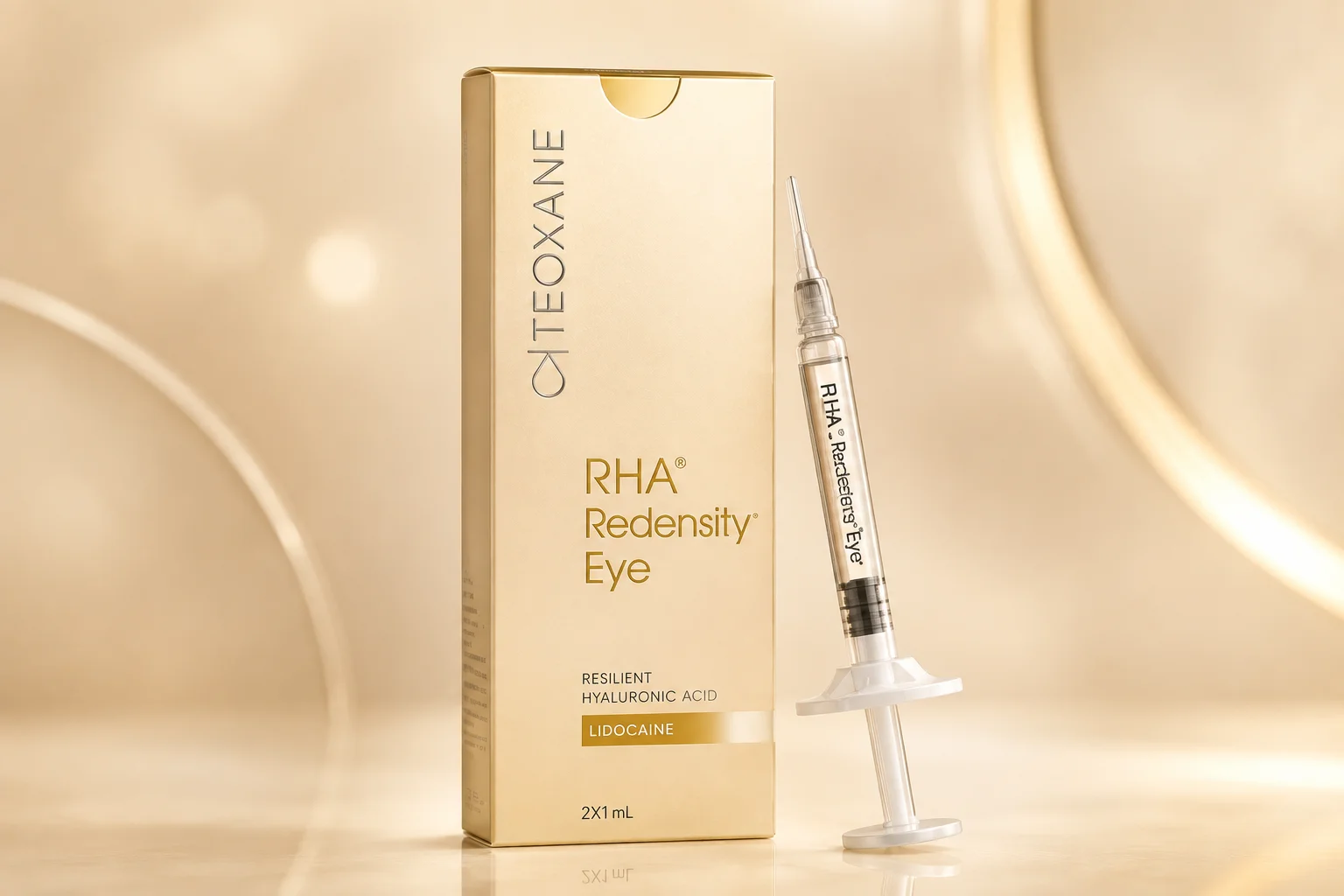
That’s about to change. On August 20, 2026, Revance and Teoxane announced that the FDA has officially approved RHA Redensity Eye from the Teoxane RHA® Collection for the correction of moderate to severe tissue volume deficiencies in the undereye region, also referred to as “infraorbital hollows,” in adults aged 22 years or older. This is a genuinely big deal in the world of injectables, and here’s why.
Why the Undereye Area Has Always Been the Hardest to Treat
Ask any experienced injector and they’ll tell you: the undereye region is not like the rest of the face. It’s anatomically complex and one of the most expressive areas of the face, which makes proper filler selection critical to achieving natural-looking results. The skin here is thin, the tissue moves constantly when we smile, squint, or express emotion, and there’s very little room for error. A filler that’s too stiff can look lumpy or cause the dreaded “Tyndall effect” (that bluish tint under thin skin). A filler that’s too soft won’t hold up structurally.
This is also why, for years, patients seeking undereye rejuvenation had limited options. Before this approval, no soft tissue dermal fillers had been approved by the US FDA specifically for use in the infraorbital region. Providers were essentially using products off-label, borrowing filler technology designed for lips or cheeks and hoping it translated well to this far more delicate zone.
What Makes RHA Redensity® Eye Different
RHA Redensity Eye isn’t just an existing filler with a new label slapped on it, it was purpose-built and clinically tested specifically for this area. Its rheological profile is uniquely optimized to deliver the highest dynamic strength and stretch of any hyaluronic acid filler</cite>, which matters enormously in a region that’s constantly in motion.
Under the hood, the product is a sterile, biodegradable, biocompatible, viscoelastic gel made from cross-linked hyaluronic acid, formulated at a concentration of 15 mg/g with lidocaine included for comfort during treatment. It’s also built on Teoxane’s proprietary technology designed to preserve the natural structure of hyaluronic acid once injected, which is part of why results tend to look soft and natural rather than “done.”
What the Clinical Data Shows
The approval rests on a 52-week U.S. pivotal trial: a prospective, randomized, evaluator-blinded, multicenter study comparing RHA Redensity Eye to no treatment in patients with moderate to severe infraorbital volume loss.
Key findings included:
- 93% of patients showed aesthetic improvement at the three-month mark.
- Results held for as long as 12 months in many participants without additional product.
- The product was the first hyaluronic acid gel in a U.S. study for this region to use patient-reported outcomes as a co-primary endpoint, meaning how patients actually felt about their results carried real weight.
Safety data looked reassuring: no late-onset or serious treatment-related adverse events, no granulomas or delayed inflammatory responses, and no vascular occlusions reported in the study. As with any injectable, common temporary side effects can include redness, swelling, tenderness, bruising, or firmness at the injection site. Serious risks, though rare, exist with any facial filler and should always be discussed with a qualified provider.
Voices from the Companies and the Clinic
Nadeem Moiz, CEO of Revance, framed the approval as part of a broader expansion of the RHA Collection: “We are continuing to expand our portfolio into the areas patients care about most, and the infraorbital region is one of the most delicate and sought-after in facial rejuvenation.”
Madame Valérie Taupin, CEO and Founder of Teoxane, highlighted the product’s suitability for the anatomy: “Its spreadability, stretch, and soft profile are exactly what this anatomy requires.”
Board-certified dermatologist and principal investigator Dr. Joely Kaufman-Janette noted the practical need: “As a practitioner, there has long been a need for a filler that meets the unique demands of the undereye area. I’m looking forward to offering my patients a meaningful new option for one of the most requested areas of the face.”
Who Is a Candidate for RHA Redensity® Eye
The approval applies to adults aged 22 years or older with moderate to severe tissue volume deficiencies in the undereye region. In practical terms, this typically describes patients who:
- Have a visible hollow or shadow beneath the lower eyelid, even when well-rested
- Notice the “tired look” persists regardless of sleep, hydration, or skincare routine
- Are looking for a non-surgical alternative to undereye correction
- Want a treatment option with actual FDA clearance for this specific area, rather than an off-label application
As always, a consultation with a qualified, experienced injector is the right first step. The infraorbital area rewards precision and a deep understanding of facial anatomy, this is not a region where you want a novice holding the syringe.
How RHA Redensity® Eye Fits Into the Broader RHA Collection
If you’ve been following the injectables space, you may already be familiar with the Teoxane RHA® Collection, which has been steadily expanding its FDA-approved indications over the past few years. The collection includes hyaluronic acid fillers such as RHA Redensity®, RHA® 2, RHA® 3, and RHA® 4, along with mepivacaine-based versions including RHA Redensity® Mepi, RHA Redensity® Eye, RHA® 2 Mepi, and RHA® 3 Mepi.
This latest approval builds on real momentum. It follows the August 2025 launch of the Teoxane RHA Collection with mepivacaine, and it comes on the heels of another recent milestone: the FDA approval of RHA® Dynamic Volume for midface contour deficiencies, announced back in January 2026. Together, these approvals show a collection that’s methodically expanding to cover more of the face with products designed for each area’s unique demands, rather than asking one filler to do every job.
What This Means If You’re Considering Undereye Filler
For patients, the biggest takeaway is choice and confidence. Having an FDA-approved, area-specific option means your provider isn’t guessing or extrapolating from data collected for a completely different part of the face. It means the safety and efficacy profile you’re being shown was actually generated by studying people with your exact concern, in your exact treatment area.
That said, no filler is a one-size-fits-all solution. Undereye hollowing can stem from several different causes and the right treatment plan depends on what’s actually driving your specific case. A thorough consultation should always include an honest conversation about whether filler is the right tool for your goals, or whether it should be combined with other approaches like skincare, resurfacing treatments, or addressing pigmentation separately.
Final Thoughts
The FDA approval of RHA Redensity® Eye marks a genuine step forward for one of the most requested treatment areas in aesthetic medicine. Patients now have access to a product that was built and clinically validated specifically for the undereye region, backed by a full year of data rather than borrowed evidence from a different indication.
If undereye hollowing has been on your mind, this approval is worth bringing up at your next consultation. Ask your provider whether they’re offering RHA Redensity® Eye, and don’t hesitate to ask about their specific experience treating the infraorbital area, technique matters just as much as the product itself in a region this delicate.
Looking for more insights on the latest advances in facial fillers and injectable treatments? Visit The Cheek Filler for expert breakdowns, product comparisons, and honest guidance to help you make informed decisions about your aesthetic care.
References
- Revance and Teoxane. “Revance and Teoxane Announce the FDA Approval of RHA Redensity® Eye for Undereye Hollowing.” PR Newswire, August 20, 2026.
- U.S. Food and Drug Administration. Summary of Safety and Effectiveness Data – RHA Redensity® Eye (P170002/S050).
- Teoxane RHA Collection. Official product information.
- Revance Therapeutics. Company information.
Considering treatment?
Browse injectors in our directory and compare their training, treatments and location before you book a consultation.