Scroll through any beauty forum or TikTok comment section right now, and you’ll notice a pattern. People aren’t just chasing smoother skin anymore, they’re after structure. High, defined cheekbones. That lifted, “snatched” look that used to require a surgeon’s scalpel and weeks of downtime.
Here’s the thing: you don’t need surgery to get there anymore.
Dermal fillers have quietly become one of the most requested treatments in cosmetic clinics across the US, and cheekbones are often ground zero for the transformation. A little bit of hyaluronic acid, placed with precision, can lift sagging midface tissue, sharpen your profile, and bring back volume that flattens out naturally as we age. No incisions. No weeks of hiding indoors. Most people are back to their normal routine the same day.
But not all filler jobs are created equal, and cheekbones are one of the trickier areas to get right. Go too subtle and nobody notices. Go too heavy and you end up looking puffy instead of polished. That’s exactly what this guide is here to unpack: how cheek fillers actually work, what results look like at every stage, how long they last, and what separates a natural-looking lift from an obvious “did work” moment.
What Are Dermal Fillers for Cheekbones, Really?
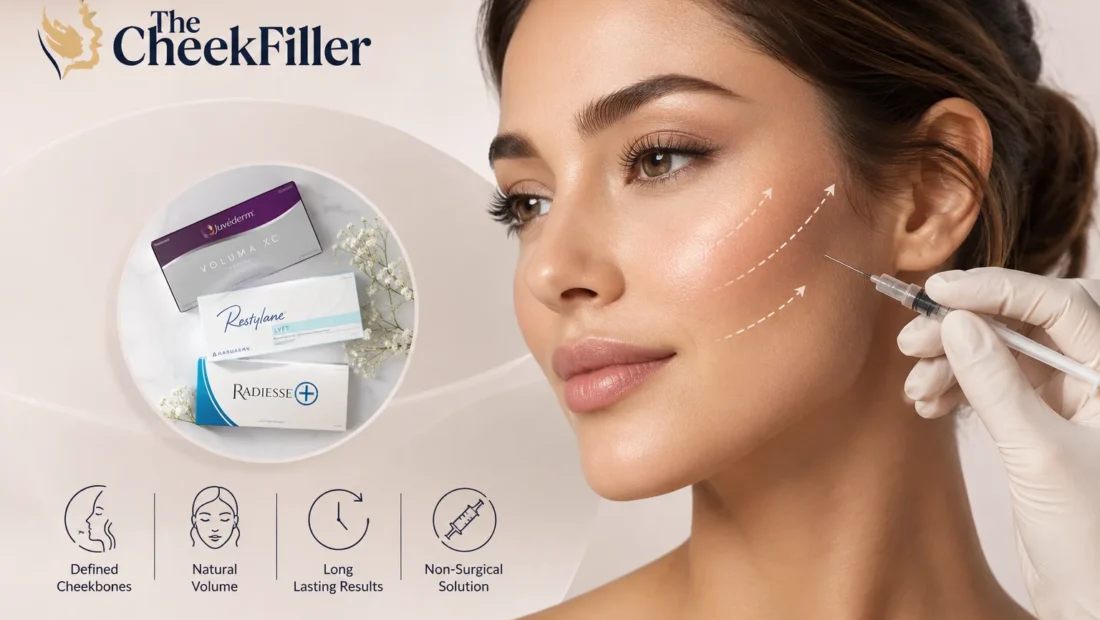
Let’s clear something up first, because a lot of blogs skip past it: cheek filler isn’t one single product. It’s a category. Most cheek fillers on the market today are hyaluronic acid (HA) based, a substance your body already produces naturally to keep skin hydrated and plump. When it’s injected into the midface, it draws in water, adds structure beneath the skin, and gives that lifted, sculpted look people are after.
Some injectors also reach for collagen-stimulating fillers, like Sculptra or Radiesse, which work a little differently. Instead of just sitting there and adding volume, they trigger your body to produce its own collagen over time. The results build gradually rather than showing up instantly, but many patients find the payoff worth the wait.
Either way, the goal is the same: rebuild volume that’s been lost, or create definition that was never quite there to begin with, without touching a scalpel.
Why Cheekbone Fillers Have Become So Popular in the US
This isn’t a fringe trend anymore. In 2024, American patients received over 5.3 million hyaluronic acid filler treatments, according to the American Society of Plastic Surgeons’ annual report and that number climbed even as the broader economy wobbled. Non-HA options like Sculptra and Radiesse held their own too, with 932,861 procedures performed that same year.
What’s interesting is who’s getting these treatments. Industry data shows soft tissue fillers remain especially popular with people aged 40 to 54, who make up roughly half of all filler patients. That tracks; this is often the age range where cheek volume starts to visibly change, and people notice the shift in photos before they notice it in the mirror.
There’s also a quieter trend worth mentioning: some clinics are seeing patients ask for “filler fatigue” alternatives, a shift away from the overfilled look toward biostimulatory treatments that encourage the body’s own collagen production over time. It’s a sign the industry, and patient expectations, are maturing. Subtlety is in. Overdone volume is out.
Types of Dermal Fillers Used for Cheek Augmentation
Not every filler behaves the same way once it’s under your skin. Some are thick and structural, built to lift. Others are softer, meant to blend and hydrate. Here’s how the most commonly used options compare.
| Filler | Main Ingredient | Best For | Typical Duration |
| Juvéderm Voluma XC | Hyaluronic acid | Strong lift, deep volume loss | Up to 2 years |
| Restylane Lyft | Hyaluronic acid | Lifting and contouring mid-cheek | 12–18 months |
| Restylane Contour | Hyaluronic acid | Natural-looking cheek definition | 12–18 months |
| Radiesse | Calcium hydroxylapatite | Structure + gradual collagen stimulation | 12–15 months |
| Sculptra | Poly-L-lactic acid | Long-term volume built gradually | Up to 2 years (results build slowly) |
A good injector rarely picks a filler off a “best of” list without looking at your face first. Someone with thin skin and minimal fat pads might need a softer, more pliable filler. Someone chasing dramatic lift might do better with something thicker like Voluma. This is part of why a consultation matters more than the product name.
What Actually Happens During a Cheek Filler Appointment
Before Treatment
A proper consultation isn’t a five-minute chat. Your injector should look at your bone structure, skin laxity, and facial proportions, and talk through what’s realistic for your face specifically, not just what looked good on someone else’s Instagram. This is also when you’ll go over allergies, medications (blood thinners in particular), and any previous filler history.
During the Injection
Most cheek filler appointments take 20 to 30 minutes. A numbing cream is usually applied first, and many fillers already contain lidocaine mixed in, so discomfort is generally mild. The injector will place small amounts of product at strategic points along the cheekbone, often using a blunt cannula rather than a sharp needle to reduce bruising risk.
Immediately After
Expect some swelling and possibly light bruising for a few days. It’s common for your cheeks to look slightly overfilled right after treatment; this settles within one to two weeks as swelling goes down. Most patients return to work or normal activities the same day, which is a big part of why this treatment has become so popular compared to surgical cheek augmentation.
How Long Do Cheek Fillers Actually Last?
This is one of the most common questions, and the honest answer is: it depends. Filler placed in the cheek tends to last longer than filler placed in areas with more movement, like the lips, simply because the cheeks stay relatively still. Most patients can expect results to last anywhere from six months to two years, with the exact timeline shaped by your metabolism, activity level, and which product was used.
If you want the long game, Voluma is often cited as one of the longest-lasting dermal fillers currently available. But “longest lasting” doesn’t automatically mean “best for you”, it just means fewer touch-up appointments, which some people value and others don’t mind trading for a softer product.
Benefits of Cheek Fillers Over Surgical Options
There’s a reason so many people choose filler over implants or a surgical cheek lift, and it’s not just cost. A few real advantages:
- No incisions, no general anesthesia. The risks that come with surgery simply aren’t part of the equation.
- Results are adjustable. Don’t love how it looks? Hyaluronic acid filler can be dissolved with an enzyme called hyaluronidase. Implants can’t be “undone” nearly as easily.
- You can change your mind later. As your face ages or your aesthetic goals shift, filler placement and volume can be adjusted at your next appointment. A cheek implant is a much longer-term commitment.
- Minimal downtime. Most surgical cheek augmentation requires real recovery time. Filler generally doesn’t.
That flexibility is a big part of why non-surgical volume treatments have outpaced surgical cheek augmentation by a wide margin, cheek implant surgery accounted for just over 9,000 procedures in 2024, a fraction of the filler numbers above.
Potential Side Effects and Risks
No injectable is entirely risk-free, and any clinic that tells you otherwise isn’t being straight with you. Common, usually mild side effects include:
- Temporary swelling or bruising at injection sites
- Tenderness or mild redness
- Slight asymmetry that typically resolves as swelling settles
Rarer but more serious risks include vascular occlusion (filler accidentally compressing a blood vessel) and infection. This is precisely why injector experience matters so much in this particular treatment area, the cheek has a dense network of blood vessels, and a skilled, anatomically trained provider knows how to navigate around them safely.
What Does Cheek Filler Cost?
Pricing varies by region, provider experience, and how much product your treatment plan requires, but here’s a general range you can expect across the US:
| Factor | Typical Range |
| Cost per syringe | $600 – $1,200 |
| Average number of syringes for cheeks | 1–3 |
| Total treatment cost | $800 – $3,000+ |
Keep in mind: the cheapest option isn’t always the smartest one here. Underpriced filler deals sometimes signal diluted product, inexperienced injectors, or both and given the vascular risks mentioned above, this is one treatment where it genuinely pays to prioritize skill over savings.
How to Choose the Right Injector
A few questions worth asking before you book:
- Are they a licensed medical professional (doctor, nurse practitioner, physician assistant, or registered nurse) with specific injectable training?
- Can they show you real before-and-after photos of cheek filler patients, not just lips or under-eyes?
- Do they talk about your facial anatomy specifically, or give you a generic sales pitch?
- Do they carry hyaluronidase on hand in case of an emergency reversal?
If the answers feel vague, it’s worth getting a second consultation elsewhere.
Conclusion
Cheekbone filler has earned its popularity honestly, it’s fast, adjustable, and when it’s done well, genuinely believable. The technology and technique have both come a long way, and the data backs up what clinics are seeing on the ground: patients want that lifted, sculpted look, but increasingly, they want it to look like them, not like a different person entirely.
If you’re considering it, the single biggest factor in how happy you’ll be with your results isn’t the brand of filler, it’s the hands holding the syringe. Choose carefully, ask questions, and don’t be afraid to walk into your consultation with a healthy dose of curiosity.
Considering treatment?
Browse injectors in our directory and compare their training, treatments and location before you book a consultation.