You’ve probably scrolled past those TikTok videos – perfect cheekbones one day, strangely puffy or uneven faces weeks later. It is enough to make anyone second-guess booking a cheek filler appointment. So, will your cheek filler actually migrate?
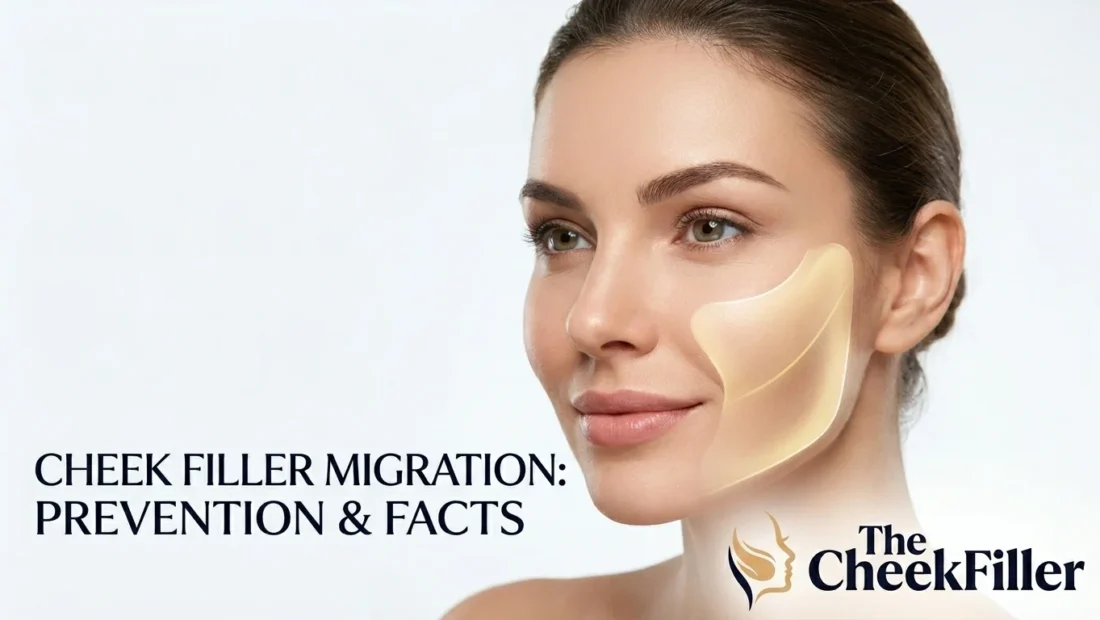
The short answer is: it can happen. But it’s far less common than social media suggests. Especially when you choose an experienced injector and the right product. Cheek filler migration occurs when the hyaluronic acid gel shifts from its intended spot into surrounding areas, sometimes creating unwanted fullness, asymmetry, or a heavier look in the midface.
This blog will break down why migration happens, the early warning signs to watch for, proven prevention tips, and what to do if you notice changes. Understanding the facts helps you make confident, informed decisions.
Main Causes of Cheek Filler Migration
Cheek filler migration isn’t as common as social media makes it seem. But when it does happen, it can be frustrating. Most cases trace back to a handful of preventable factors. Understanding these helps you feel more confident about your choices and spot potential red flags before they become a problem.
Improper Injection Technique and Placement
The biggest culprit behind cheek filler migration is usually how and where the product is placed. Cheeks need structural support. Which means the filler should typically go deep. When it is injected too superficially, into the wrong tissue plane, or with too much pressure, the gel has nowhere to stay put and can drift into nearby fat pads or even toward the tear trough area.
Experienced injectors know the anatomy intimately and use the right tools to create stability. Less qualified providers often miss these details, leading to that unwanted puffiness or heaviness lower in the face.
Overfilling or Using Too Much Volume
Your facial tissues can only hold so much volume comfortably. When too much filler is added in one session. Or when a new product is layered over an old filler without dissolving first, the pressure builds up. The excess has to go somewhere, and it often migrates outward or downward.
Many patients see better, longer-lasting results from building volume slowly over multiple sessions rather than going big all at once.
Wrong Filler Choice for the Area
Not all hyaluronic acid fillers behave the same. Softer and more hydrophilic products work beautifully in some spots but can spread more easily in the dynamic midface. For cheeks, firmer, higher G-prime dermal fillers designed for deep structural support tend to stay in place better than softer ones meant for lips or fine lines.
Choosing the right product based on your anatomy and goals makes a huge difference in how well results hold up over time.
Facial Movement, Anatomy, and Aftercare Factors
Everyday things like smiling, talking, and natural facial expressions create constant micro-movements that can gradually press filler if other factors are already in play. Individual anatomy, gravity over time, and early post-treatment behaviors can also contribute.
While these aren’t usually the main drivers on their own, they can tip the scales when combined with technique or volume issues.
How To Avoid Filler Migration
According to the American Society of Plastic Surgeons, choosing a qualified provider who understands facial anatomy is essential to minimizing risks like displacement or vascular complications. The truth is, most cases of cheek filler migration are preventable when you make smart, informed decisions from the start. After seeing hundreds of patients, I can tell you that the difference between beautiful, natural-looking results and those “off” cases usually comes down to a few key choices. Here is exactly what actually works:
- Choose an experienced, medically trained injector
- Select the right filler for the cheeks
- Go conservative with volume and plan treatments gradually
- Follow proper aftercare instructions carefully
- Do not touch or massage the cheeks unnecessarily
- Respect your facial anatomy and timing
Final Words!
Cheek filler migration is avoidable in most cases when you prioritize the right injector, proper technique, suitable product, and conservative volume. While it’s smart to stay informed about the risks, don’t let rare complications stop you from achieving the refreshed look you want.
With careful planning and expert care, cheek fillers can deliver beautiful, natural, and stable results that boost your confidence for years.
For trusted advice, expert insights, and safe cheek filler treatments, visit The Cheek Filler.
Book Your Consultation Now
Considering treatment?
Browse injectors in our directory and compare their training, treatments and location before you book a consultation.