If you’ve ever looked in the mirror and felt your face looked a little flatter or more tired than you feel, you’re not imagining it. Cheeks are the scaffolding of the midface. When they lose volume, everything above and below them starts to shift: the under-eyes look hollow, the nasolabial folds deepen, and the jawline softens.
That’s why Juvederm cheek filler is one of the most requested non-surgical treatments in aesthetic clinics across the US. It restores structure without a scalpel, takes under an hour, and (done well) doesn’t leave you looking “done.”
This guide walks through what it is, which Juvederm product is used, what the appointment feels like, what results look like, and what most people don’t think to ask before booking.
What Is Juvederm Cheek Filler?
Juvederm is a family of hyaluronic acid (HA) dermal fillers made by Allergan Aesthetics, an AbbVie company. Hyaluronic acid is a sugar molecule your body already produces. It holds water, which is why it plumps skin and adds volume.
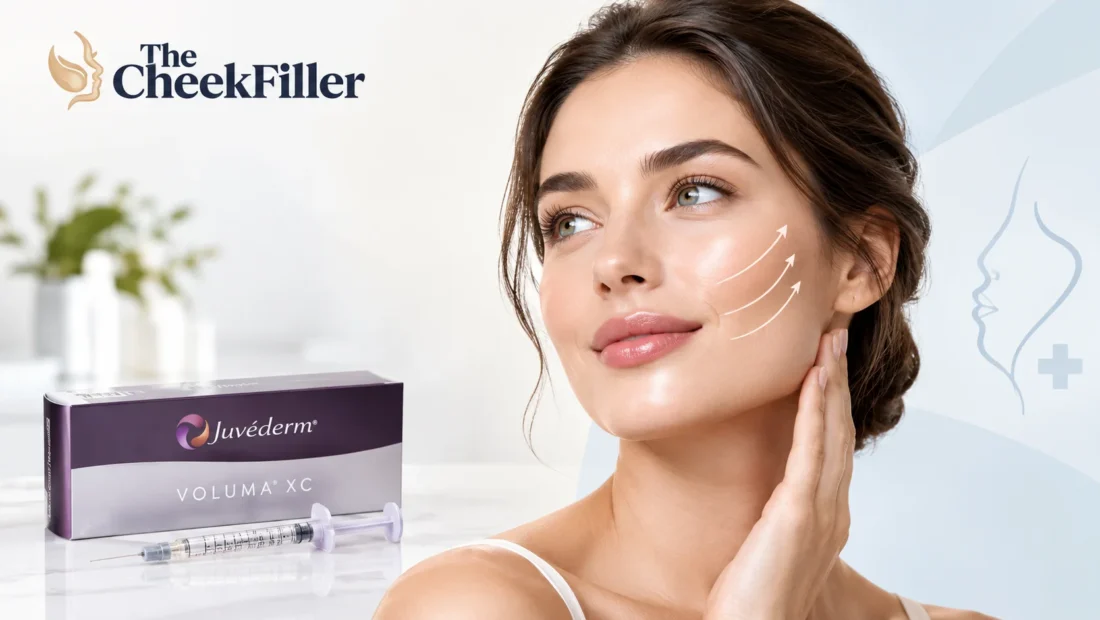
When someone says “Juvederm cheek filler,” they usually mean Juvéderm Voluma XC, the product FDA-approved for the cheek area. It’s built to lift and add structure to the midface rather than just soften fine lines.
How Is It Different From Other Cheek Fillers?
Not all HA fillers behave the same. Some are soft and spreadable (great for lips). Others are firm and lifting (better for cheeks and jawline). Voluma sits firmly in the second category. It uses Allergan’s Vycross technology, which blends different molecular weights of HA so the gel is cohesive, supportive, and moves naturally with your expressions.
If you’re curious how it compares with other brands, our Juvéderm vs. Restylane breakdown covers the differences in more detail.
Which Juvederm Products Are Used for Cheeks?
Most patients hear only “Voluma,” but injectors often choose from a few products depending on what your face needs.
| Product | Best For | Feel & Structure | Typical Longevity* |
| Juvéderm Voluma XC | Cheek volume, midface lift, contouring | Firm, lifting | Up to 2 years (FDA-labeled) |
| Juvéderm Volux XC | Jawline and chin definition; sometimes used on the lower cheek edge | Very firm, sculpting | Up to 1 year or more |
| Juvéderm Vollure XC | Softer support around the nasolabial folds and “marionette” zone | Medium, smooth | Up to 18 months |
| Juvéderm Volbella XC | Fine lines, delicate areas near the tear trough | Soft, subtle | Up to 1 year |
*Longevity varies by metabolism, injection depth, treatment area, and how much product is used. Your provider’s guidance matters more than any brochure number.
The “XC” simply means the formula contains lidocaine, a local anesthetic, which makes the injection more comfortable.
Who Is a Good Candidate?
Cheek filler tends to work best if you:
- Notice flattening or hollowing in the midface
- Have early to moderate volume loss, not significant skin laxity
- Want a subtle lift without surgery
- Have realistic expectations (filler adds volume, it doesn’t tighten loose skin)
- Are in generally good health and over 21 (Voluma’s FDA approval is for adults over 21)
It may not be the right fit if you’re pregnant or breastfeeding, have an active skin infection near the treatment area, have a known allergy to lidocaine or HA products, or have certain bleeding or autoimmune conditions. This is exactly why a real consultation matters. A good injector will tell you when not to treat.
What Happens During a Juvederm Cheek Filler Appointment?
Knowing the process makes it a lot less intimidating.
Step 1: Consultation and Facial Assessment
A qualified provider looks at your face from multiple angles, at rest and in motion. Good injectors don’t just chase the hollow spot. They look at how your cheekbone, temple, under-eye, and jawline relate to each other. Sometimes the best cheek result comes from placing product slightly outward and higher, not directly on the apple of the cheek.
Step 2: Prep and Numbing
The skin is cleansed, and a topical numbing cream is sometimes applied. Because the filler already contains lidocaine, most people describe the sensation as pressure and mild pinching rather than pain.
Step 3: Injection
Using either a fine needle or a blunt-tipped cannula, the provider places the filler deep, often near the bone, to build support. It usually takes 15 to 30 minutes.
Step 4: Molding and Aftercare
Your provider may gently massage or shape the area. You can typically return to normal activities right away, though it’s smart to avoid heavy workouts, saunas, and alcohol for a day or two.
What Results Should You Expect?
Here’s the honest version. You’ll see an improvement right away, but the final result settles over about two weeks as swelling fades and the gel integrates with your tissue.
Most patients describe the change as “I look rested” rather than “I look different.” That’s the goal. A well-placed cheek filler can:
- Restore youthful midface fullness
- Soften the look of nasolabial folds indirectly (by lifting from above)
- Reduce the appearance of hollow under-eyes in some patients
- Improve facial balance and contour
One thing worth understanding: filler in the cheeks often improves the lower face without treating it directly. Lift the midface, and the folds beneath it relax. Many patients need less product in the folds than they expected.
How Long Does Juvederm Cheek Filler Last?
Juvéderm Voluma XC is FDA-approved for up to two years of correction in the cheek area, based on clinical data. In practice, many patients find results begin to soften somewhere between 12 and 24 months.
A few things influence how long it lasts:
- Metabolism: Faster metabolisms break down HA more quickly.
- Amount of product: Larger volumes generally last longer.
- Injection depth and placement: Deeper, structural placement tends to hold up better.
- Lifestyle: Intense exercise, heavy smoking, and heavy sun exposure can shorten longevity.
- Touch-ups: A small top-up at 12 to 18 months can extend results with less product overall.
How Much Does Juvederm Cheek Filler Cost?
Pricing in the US is usually per syringe. Voluma typically runs about $800 to $1,500 per syringe, and most people need one to three syringes for the cheeks depending on their anatomy and goals. Costs vary by city, provider experience, and clinic type.
A few honest pointers on price:
- The cheapest quote isn’t always the best value. Filler is a medical procedure, and injector skill is the real product.
- Ask whether pricing is per syringe or per treatment, and how many syringes they expect you to need.
- Cheek filler is cosmetic, so insurance does not cover it.
Risks and Side Effects: What’s Normal, What’s Not
Most side effects are mild and short-lived:
- Swelling, tenderness, or redness at injection sites
- Bruising (arnica and cold compresses can help; avoid blood-thinning supplements beforehand if your doctor agrees)
- Small lumps or unevenness that usually settle or can be massaged out
- Mild tightness for a few days
Rare but Serious Complications
Rare complications include vascular occlusion (filler blocking a blood vessel), infection, and allergic reactions. Signs that need urgent attention include severe pain, skin that turns white, gray, or blotchy, vision changes, or rapid worsening swelling. Call your provider or seek emergency care right away.
This is one big reason to choose a licensed, experienced injector who has hyaluronidase (the enzyme that dissolves HA filler) on hand and knows how to use it.
Juvederm Cheek Filler vs. Other Options
If you’re comparing your choices, here’s a quick way to think about it.
- Voluma vs. Restylane Contour or Lyft: Both are HA fillers designed for cheek volume. Voluma tends to be a bit smoother and more flexible in movement, while Restylane options can feel slightly more defined. The best fit often depends on your anatomy and your injector’s preference.
- Filler vs. Sculptra: Sculptra stimulates your own collagen gradually and can last longer, but results build slowly and aren’t reversible.
- Filler vs. cheek implants: Implants are surgical and permanent. Filler is temporary and adjustable. If you’re weighing this, our guide on cheek fillers vs. implants goes deeper.
- Filler vs. facelift: Filler adds volume; a facelift removes excess skin and repositions tissue. They solve different problems.
How to Choose the Right Injector
This matters more than the brand of filler. Before you book, look for:
- A licensed medical professional such as a board-certified dermatologist, plastic surgeon, or experienced nurse injector
- Before-and-after photos of cheek work specifically, not just lips
- A willingness to say no or to recommend less
- Clear answers about product authenticity (genuine Juvéderm comes in sealed, labeled syringes)
- A plan for complications, including access to hyaluronidase
Red flags: pressure to buy packages, unusually low prices, injections in unlicensed settings, or anyone who promises “instant transformation.”
Aftercare Tips for Smoother Healing
- Keep your head slightly elevated the first night
- Skip strenuous exercise for 24 to 48 hours
- Avoid pressing or massaging the area unless your injector tells you to
- Hold off on facials, heat treatments, and dental work for about two weeks
- Use cold compresses for swelling, and wear sunscreen daily
Final Thoughts
Juvederm cheek filler works best when the goal is to look like a well-rested version of yourself, not a different person. The product matters, but the injector’s eye matters more. Do your homework, ask questions, and don’t be afraid to start small.
If you’re considering treatment, book a consultation at The Cheek Filler, bring photos of how you looked when you felt happiest with your face, and let a qualified provider map out a plan that fits you.
Disclaimer: This article is for educational purposes only and isn’t medical advice. Talk to a licensed healthcare professional about whether Juvederm cheek filler is right for you.
Considering treatment?
Browse injectors in our directory and compare their training, treatments and location before you book a consultation.