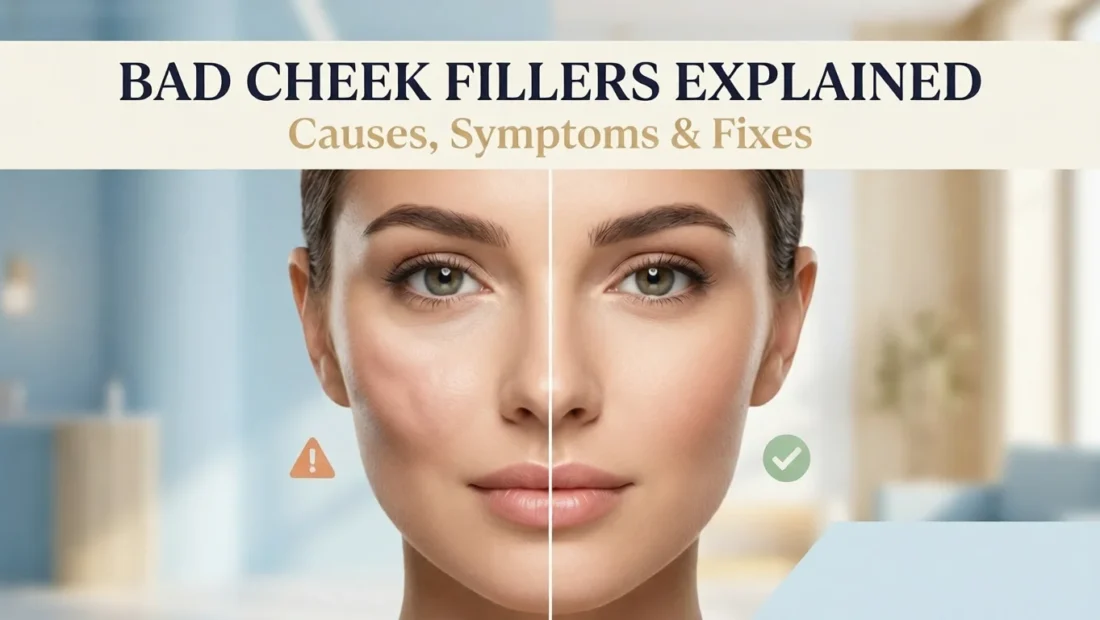
Cheek fillers can look stunning when they’re done right. But when something goes wrong, the results can be unsettling. Many patients in the US end up with “pillow cheeks,” uneven symmetry, or persistent swelling because of over-injection, shallow placement, or a filler that simply doesn’t match their anatomy. Sometimes filler migrates toward the under-eye area, creating puffiness or a bluish Tyndall effect. Rare but serious risks include vascular occlusion, which can lead to skin necrosis or even vision loss if filler enters a blood vessel.
If you’re noticing lumps, pain, discoloration, or a mask-like look that won’t settle after two weeks, it’s worth getting evaluated by a qualified injector. Most bad cheek filler cases can be corrected, often with hyaluronidase to dissolve hyaluronic acid fillers, massage for minor lumpiness, or, in complex cases, ultrasound-guided care. This guide walks you through the warning signs, common causes, and real-world fixes so you can make safe, informed decisions about your results.
What Are Bad Cheek Fillers?
Bad cheek fillers happen when dermal fillers go wrong, leaving you with unnatural, disproportionate results instead of the subtle lift you wanted. Think overly puffy “pillow face,” uneven contours, visible lumps, or that strange tightness that changes how your smile looks.
It’s rarely the product itself that’s the villain. More often, it’s too much volume in the wrong spots, poor injection technique, or choosing someone who doesn’t truly understand facial anatomy. Many patients end up chasing a trend rather than restoring natural balance, and the outcome can look obvious or even aged.
The good news is that recognizing what went wrong is the first step toward fixing it safely.
Causes Of Bad Cheek Fillers
Bad cheek filler results usually stem from a few key mistakes, some technical, some about planning. Here’s what most often goes wrong:
- Inexperienced or unqualified injector: Placement depth, angle, and product choice matter hugely; beginners often inject too shallowly or overfill.
- Over-injection (“too much filler”): Pushing more product than the cheek can naturally support creates “pillow cheeks,” mask-like stiffness, or swelling that won’t settle.
- Poor anatomical assessment: Ignoring your unique facial structure leads to uneven symmetry, migration toward the under-eye, or unnatural contours.
- Wrong filler type or quality: Using a filler that’s too stiff, not raises appropriately, or isn’t FDA-approved increases risks of lumps, Tyndall effect, or migration.
- Lack of follow-up or correction plan: Without a 2-week check-in, minor issues (lumpiness, slight asymmetry) can worsen before they’re addressed.
- Pre-existing conditions: Autoimmune issues (lupus, dermatomyositis) or active infections can trigger unusual swelling, inflammation, or poor healing.
The takeaway: choosing a skilled, board-certified injector who tailors the plan to your face and offers a correction option if needed cuts down most of these risks.
Common Signs of Botched or Bad Cheek Fillers
If your cheek filler result feels off, you’re not alone; many patients notice these warning signs within the first few weeks. Here’s what to watch for:
- Lumps or bumps
- Visible asymmetry
- Pillow cheeks
- Filler migration toward the under-eye area
- Bluish or gray tint (Tyndall effect)
- Persistent swelling, redness, or pain
- Granulomas (small, firm nodules)
Major Risks and Complications of Cheek Fillers
While most cheek filler treatments go smoothly when performed by skilled hands, it’s important to understand that serious issues can still arise. I’ve seen patients who were never properly warned about what could go wrong, and that’s why I always emphasize informed decisions.
Here are the major risks and complications to be aware of:
- Vascular Occlusion: One of the most serious risks, where filler accidentally blocks a blood vessel. This can cause tissue damage, skin necrosis, or, in extremely rare cases, affect vision.
- Infection: Though uncommon with proper sterile technique, bacteria can lead to painful swelling, abscesses, or long-term issues if not treated quickly.
- Nodules and Granulomas: Hard, persistent lumps that form as the body reacts to the filler material, sometimes appearing months or even years later.
- Tyndall Effect: A bluish tint under the skin, often from filler placed too superficially in thin areas around the cheeks or under-eyes.
- Filler Migration: The product shifts from the intended area, creating unnatural bulges or distorting facial harmony.
- Allergic Reactions or Delayed Hypersensitivity: Swelling, redness, or chronic inflammation that may require medical intervention to resolve.
How to Spot a Bad Cheek Filler Before It’s Too Late
The best way to avoid regret is to catch problems early, ideally before the filler is even injected. Over the years, We have helped many patients who wished they had trusted their gut during the consultation or right after treatment. Here’s what to watch for:
- Rushed Consultations: The injector skips a thorough facial assessment, doesn’t discuss your goals in detail, or pushes for more volume than you’re comfortable with.
- Unnatural Before-and-After Photos: Gallery images show overly dramatic, puffy cheeks instead of subtle, refreshed results that still look like you.
- Pressure to Overfill: They recommend treating far more areas than you asked for or suggest “topping up” immediately.
- Immediate Post-Treatment Red Flags: Extreme asymmetry, one side much larger, or a strangely tight, shiny appearance that doesn’t settle within 48 hours.
- Lack of Aftercare Guidance: No clear instructions on swelling management, follow-up appointments, or what to do if something feels off.
- Feeling “Heavy” or Restricted Movement: Your cheeks feel stiff or your smile looks different right away.
Trust your instincts. If something feels wrong, it’s always better to pause and seek a second opinion from a qualified professional rather than hoping it improves on its own.
Can Bad Cheek Fillers Be Fixed?
Yes, most bad cheek filler results can be fixed, especially when you act early. The right approach depends on what’s going wrong, but here’s what typically works:
- Hyaluronidase (enzyme dissolution)
The go-to for hyaluronic acid fillers; it breaks down the product quickly, often within 24–72 hours.
- Targeted massage
Useful for minor lumpiness or slight asymmetry; your injector can teach you the right technique.
- 2-week follow-up & revision
After dissolving or settling, a skilled injector can re-contour cheeks for better symmetry and a natural look.
- Ultrasound-guided care
For deeper or migrated filler, imaging helps pinpoint exactly where to dissolve or adjust.
- Anti-inflammatories or antibiotics
If swelling, redness, or infection is present, medication can calm the area before correction.
- Surgical removal
Rare, but needed for granulomas, persistent nodules, or non-HA fillers that won’t dissolve.
Action step: If you notice lumps, asymmetry, puffiness, or pain that won’t settle after two weeks, book an evaluation with a board-certified injector. Most corrections happen smoothly when caught early and you’ll avoid long-term complications.
The Hidden Dangers of Cheap Cheek Fillers
It’s tempting to save money on cheek fillers, especially when deals look too good to pass up. But in my experience, going for the cheapest option often ends up costing far more, both financially and emotionally, when things go wrong.
Here are the hidden dangers most people don’t see until it’s too late:
- Unqualified Injectors: Many low-cost providers lack proper medical training or deep understanding of facial anatomy, leading to poor placement and unnatural results like overfilled cheeks or asymmetry.
- Counterfeit or Low-Quality Fillers: Cheap treatments sometimes use unapproved, expired, or fake products that can trigger severe reactions, migration, or lumps that are harder to dissolve.
- Compromised Safety Standards: Bargain clinics may cut corners on sterility, increasing your risk of infection, abscesses, or inflammatory responses.
- No Real Aftercare or Follow-Up: You often get minimal guidance and no support if complications arise, leaving you to deal with issues on your own.
- Pressure Tactics and Over-Treatment: Some push excessive volume to justify the low price, creating that dreaded pillow face or distorted features that are difficult to correct.
Saving a few hundred dollars isn’t worth risking your face. Always choose experienced, licensed medical professionals who prioritize safety and natural-looking outcomes over discounts. Your results are worth the investment.
Dissolving Cheek Fillers: What You Need to Know About Hyaluronidase
If your cheek filler result looks off, hyaluronidase is often the fastest way to fix it. This enzyme breaks down hyaluronic acid (HA) fillers, the most common type used in cheek augmentation, by essentially “unlocking” the product so your body can absorb it naturally.
What to expect:
- Most patients see noticeable improvement within 24–72 hours, though full results can take up to a week.
- The injection itself is quick (usually under 10 minutes) and may cause mild tingling or temporary swelling.
- You’ll typically need 1–2 sessions depending on how much filler was placed and where it migrated.
Important caveats:
- Hyaluronidase only works on HA fillers. If you received non-HA products (like polyacrylamide or silicone), surgical removal may be necessary.
- Rare side effects include redness, itching, or an allergic reaction, your injector should screen for this beforehand.
- Always go to a qualified, experienced injector who can calculate the right dose and avoid nearby blood vessels.
How to Choose the Right Injector and Avoid Bad Cheek Fillers
The single biggest factor in avoiding bad cheek fillers isn’t the product, it’s the person holding the needle. A skilled injector understands facial anatomy, chooses the right filler for your goals, and knows exactly how much to use to keep results natural. Here’s how to find someone you can trust:
- Verify credentials: Look for a board-certified dermatologist, plastic surgeon, or nurse injector with specific training in facial injectables.
- Review their before-and-afters: Real photos show consistency and natural results, not just “filled” faces.
- Ask about the filler: Confirm they use FDA-approved hyaluronic acid fillers (like Juvederm, Restylane) and can tell you the exact product name.
- Check for a correction plan: A reputable injector will offer a 2-week follow-up and explain how they handle complications, including dissolution with hyaluronidase if needed.
- Avoid bargain deals: Cheap fillers often mean counterfeit products or untrained staff, which dramatically increases risks.
If you’re looking for expert guidance and safe cheek filler results, The Cheek Filler offers personalized consultations and uses only FDA-approved products with a focus on natural, balanced outcomes. Their approach prioritizes anatomy-first planning and includes follow-up care to ensure you’re happy with every step of your result. Choosing the right injector doesn’t just protect your face, it protects your confidence.
Considering treatment?
Browse injectors in our directory and compare their training, treatments and location before you book a consultation.